
LMU adds two new fraternities on campus

Originally published in the Los Angeles Loyolan. For original, please refer to: LMU adds two new fraternities on campus – Los Angeles Loyolan.

A process that began in Spring 2012 has finally born fruit: Two new fraternities will be joining LMU’s Greek Life over the next two years.

Delta Sigma Phi and Phi Delta Theta, two national fraternities, will be establishing chapters in this and the next academic year, respectively.

“These organizations were not only a strong match with our institutional mission and values, they offer the resources necessary to start and maintain a successful fraternal chapter at LMU,” said Assistant Director of Student Leadership and Development (SLD) and Greek Adviser Dan Faill in a letter to leaders in the LMU and Greek Life communities sent this past June.

DeMarkco Butler, the director of expansion for Phi Delta Theta, spoke optimistically about the effect the new fraternity will hopefully have on campus.

“I believe Phi Delta Theta will complement the already great culture that the Greek community has by adding another strong international fraternity,” he said. “Additionally, we look to bring new recruitment tactics [and] foster healthy relationships amongst [Loyola] Marymount University and [the] Greek community.”

The process of expanding the number of fraternities on campus began with Student Leadership and Development (SLD) determining that the campus could support further growth in the Greek Life community. According to the Greek Life policies in LMU Community Standards, SLD is the only organization on campus that can initiate an expansion process.

According to Faill’s letter, the process is a direct response to low recruitment ratios among fraternities in recent years. “In Spring 2012, nearly 60 percent of eligible men who registered for fraternity recruitment were not offered an invitation to join one of our registered groups. However, our six registered fraternities still saw increased membership numbers,” the letter said. “It became evident more opportunities for our undergraduate men were needed.”

Current LMU fraternity Sigma Phi Epsilon’s President Michael Hanover recognized the need for more fraternities as well. “The number of men that rush versus the ratio that actually get bids is much lower than that of sororities. And I think that’s unfortunate,” he said. “I don’t know how to fix that besides adding new fraternities, because I believe that each fraternity should have the right to choose, and I don’t think that forcing certain recruitment practices on a chapter is fair.”

The two fraternities were chosen from a pool of six that gave presentations on campus. That pool was narrowed down from 12 fraternities that submitted informational packets to the University in March. The informational sessions were held on campus in April.

The Fraternity Review and Fraternity Expansion Committees, according to Faill’s letter, “spent many hours reviewing application materials from various organizations, discussing the values and match with LMU and interviewing the finalists.” The committees included representatives from University Relations, Student Life, SLD, Ethnic and Intercultural Services, Greek Council and the presidents of three current fraternities and two sororities.

Hanover, a junior political science major, first heard of the expansion at the beginning of his presidential term in spring. However, according to the letter sent by Faill, Sigma Phi Epsilon was the only fraternity without a representative in the expansion process. (Lambda Chi Alpha, Alpha Delta Gamma and Beta Theta Pi’s presidents all served on one of the committees, while Sigma Chi’s Joe Dzida participated in his capacity as Greek Council president.)

“I knew that there were 12 possibilities, I knew that there were six informational sessions, I believe I attended one,” Hanover said. “I read through some of the books that each fraternity submitted. Other than that, I was absolutely uninvolved. I wish I had a little more opportunity to give some input.”

According to Hanover, the members of Sigma Phi Epsilon have been informed by the head of their alumni volunteer corporation as to what exactly happens when a new fraternity joins campus.

“The thing I’ve been focusing on as I think about it is how their national headquarters … will step in and basically take care of them and all their needs, help them with recruiting and that kind of thing,” he said. “So it’s not just a new group of students organizing. It’s more than that. It’s a national group creating a new body of students here on campus.”

“To prepare for the LMU colonization, we will do a few things,” Butler said. “[We will] host a Phi Delta Theta alumni reception that will inform the area alumni on our upcoming expansion project at LMU [and] build a Chapter Advisory Board that consists of Phi Delta Theta alumni, non-Phi Delt affiliates, non-Greek men/women professionals and University officials.”

On his end, Hanover is “flat-out excited” to see how the new fraternities form. As his presidential term winds down, however, he spoke of leaving a legacy of acceptance of these new fraternities to his brothers.

“All I would tell the other guys [in Sigma Phi Epsilon] is that everybody deserves an opportunity to form an organization and to make it the best that they can, and all I’d tell them is, ‘Wish those guys the best of luck. Help them out when you can. Give them advice when you can,’” he said. “‘But always focus on … making Sig Ep the best that you can to the best of your abilities.’”

new recruitment tactics [and] foster healthy relationships amongst [Loyola] Marymount University and [the] Greek community.”

The process of expanding the number of fraternities on campus began with SLD determining that the campus could support further growth in the Greek Life community. According to the Greek Life policies in LMU Community Standards, SLD is the only organization on campus that can initiate a Greek Life expansion process.

According to Faill’s letter, the process is a direct response to low recruitment ratios among fraternities in recent years. “In Spring 2012, nearly 60 percent of eligible men who registered for fraternity recruitment were not offered an invitation to join one of our registered groups. However, our six registered fraternities still saw increased membership numbers,” the letter said. “It became evident more opportunities for our undergraduate men were needed.”

Current LMU fraternity Sigma Phi Epsilon’s President Michael Hanover recognized the need for more fraternities as well. “The number of men that rush versus the ratio that actually get bids is much lower than that of sororities. And I think that’s unfortunate,” he said. “I don’t know how to fix that besides adding new fraternities, because I believe that each fraternity should have the right to choose, and I don’t think that forcing certain recruitment practices on a chapter is fair.”

Two fraternities were chosen from a pool of six that gave presentations on campus. That pool was narrowed down from 12 fraternities that submitted informational packets to the University in March. The informational sessions were held on campus in April.

The Fraternity Review and Fraternity Expansion Committees, according to Faill’s letter, “spent many hours reviewing application materials from various organizations, discussing the values that match with LMU and interviewing the finalists.” The committees included representatives from University Relations, Student Life, SLD, Ethnic and Intercultural Services, Greek Council and the presidents of three current fraternities and two sororities.

Hanover, a junior political science major, first heard of the expansion at the beginning of his presidential term in spring. However, based off the letter sent by Faill, Sigma Phi Epsilon was one of two fraternities without a representative in the expansion process. (Lambda Chi Alpha, Alpha Delta Gamma and Beta Theta Pi’s presidents all served on one of the committees, while Sigma Chi’s Joe Dzida participated in his capacity as Greek Council president.)

“I knew that there were 12 possibilities, I knew that there were six informational sessions, I believe I attended one,” Hanover said. “I read through some of the books that each fraternity submitted. Other than that, I was absolutely uninvolved. I wish I had a little more opportunity to give some input.”

According to Hanover, the members of Sigma Phi Epsilon were informed by the head of their alumni volunteer corporation as to what exactly happens when a new fraternity joins campus.

“The thing I’ve been focusing on as I think about it is how their national headquarters … will step in and basically take care of them and all their needs, help them with recruiting and that kind of thing,” he said. “So it’s not just a new group of students organizing. It’s more than that. It’s a national group creating a new body of students here on campus.”

“To prepare for the LMU colonization, we will do a few things,” Butler said. “[We will] host a Phi Delta Theta alumni reception that will inform the area alumni on our upcoming expansion project at LMU [and] build a Chapter Advisory Board that consists of Phi Delta Theta alumni, non-Phi Delt affiliates, non-Greek men/women professionals and University officials.”

On his end, Hanover is “flat-out excited” to see how the new fraternities form. As his presidential term winds down, however, he spoke of leaving a legacy of acceptance of these new fraternities to his brothers.

“All I would tell the other guys [in Sigma Phi Epsilon] is that everybody deserves an opportunity to form an organization and to make it the best that they can,” he said.

He added, “all I’d tell them is, ‘Wish those guys the best of luck. Help them out when you can. Give them advice when you can.”
Spencer Sharpe

11 Burning Questions with a 2012 Olympic attendee

Originally published in the Los Angeles Loyolan. For original, please refer to: 11 Burning Questions with a 2012 Olympic attendee – Los Angeles Loyolan.

Spencer Sharpe

Photo Credit: Liana Bandziulis | The Los Angeles Loyolan

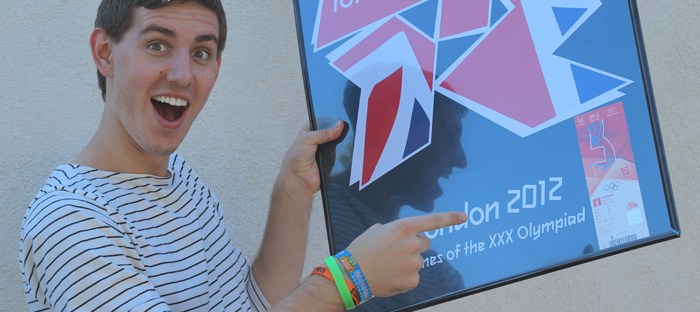
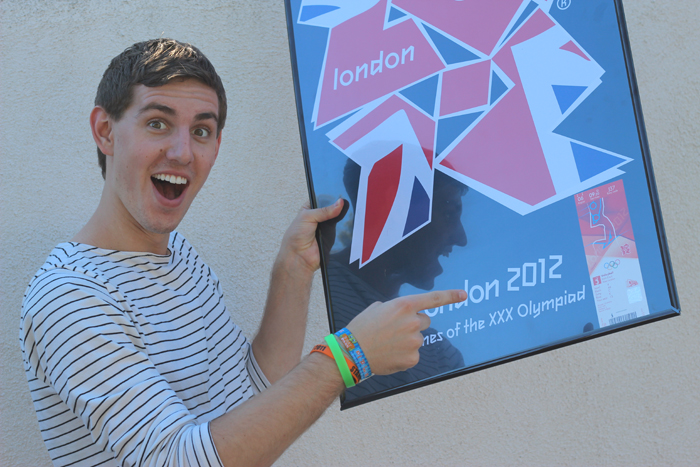
1. How did you get the opportunity to attend the Games?

I learned about a program at the London School of Economics and Political Science through one of my friends who actually was a graduating [LMU student and] Ignatian last year. … I then checked the dates and realized they lined up with the Olympics. So it was kind of an accident.

2. What events did you see?

I saw men’s volleyball. That’s the only thing I could get tickets to, actually, because they stopped selling tickets to Americans. … I was asking at an information booth, “I’m just looking for a ticket. I really don’t care what it is, any event.” And the guy next to me said, “I have some extra tickets, I’m not gonna be able to go to this event. I’ll sell them to you at the same price I paid for them.” And people were paying, like, five to 10 times the value of the ticket, so for 20 pounds, I said yes, and I got to go to the men’s volleyball match between Poland and Australia, and it was really cool. Most people weren’t rooting for a specific team, so every time a point was scored, the audience went crazy.

3. Who was your favorite Olympian this year?

It would have to be Michael Phelps. I still think he’s a god. I think he’s amazing in the fact that he can come back after four more years have gone by and still win gold against brand new athletes and younger athletes.

4. Has it been a goal of yours to go to the Olympics?

More of a dream. I’m originally from Iowa, so I never really thought it would be possible, because the Olympics aren’t coming to Iowa, ever. I never really imagined I’d get the opportunity, so this huge accident was kind of fulfilling one of my dreams.

5. Do you feel you can go back to watching the Olympics on TV after seeing them in person, or will it just not compare?

There’s no comparison anymore. I got the opportunity to watch the Olympics with a whole bunch of people from all around the world, because it was a very international school that I went to, so it was really exciting, watching it there in the city with those people.

6. Do you consider yourself more of a summer Olympics guy or do you prefer the winter Olympics?

I definitely like summer. There are more events I can watch that are more suspenseful. … My sister’s really into soccer, so my family’s a big soccer family, so we always watch those games. I really think the equestrian events are cool, the swimming is awesome, the diving is fun. [Spencer’s sister is LMU soccer team captain and senior Whitney Sharpe.]

7. What else did you do while in London?

I did a lot of cultural stuff, and I did a lot of nerdy stuff. I went to the British Museum, the British Library, and I got to see some of J.K. Rowling’s handwritten [pages] of the first Harry Potter ever, and the first ever drawing of the Shire from “The Hobbit.” The best thing to do … was the pubs you could go to, just because there were people from all around the world at every single pub that you went to, and it was just so international and such a world city at that time.

8. If you could compete in one Olympic event, which would you choose?

I would do the high dive, because I think that’s fascinating. I really think that being up that high and jumping would get my adrenaline rushing.

9. For freshmen reading the Loyolan for the first time, what advice do you have for them?

I’d say, really, if you’re trying to get a solid GPA, don’t take your first classes as a joke. Really focus on your coursework. … Don’t forget that you’re here for school.

10. What are you involved in on campus?

I am an Ignatian, and I’m working on starting a new organization on campus, but it doesn’t exist yet. It’ll be a policy-based organization. Our idea, me and a few other Ignatians, is that it [will focus on] issues that affect Los Angeles. So homelessness, economic issues, environmental issues. We’re going to find professors at LMU who study that issue and then what we’re going to do is with them, create a type of policy proposal or a solution to that problem. Just in a sense of hoping LMU students become more aware of issues that affect Los Angeles so we can offer real solutions. (online only)

11. What are your big hopes for LMU during in its 101st year?

I hope that LMU continues to create a great reputation. I feel like with our 100th year, more people were becoming aware of our University, because it’s mostly a regional school, I’d say. So I hope we continue projecting our image both nationally and internationally, so that eventually our school could be a little more recognized. … I just don’t think people take LMU as seriously as they should.

12. LMU’s LGBTSS is staging a presentation of the play “8,” about Proposition 8 and marriage equality, in early September. The decision has just started to get a little flack. Thoughts?

As someone who’s a bisexual individual, I really do care about this issue. … What I think the University should recognize, as I think they did by [allowing] this, that they have a wide range of students. Not every student is a Catholic or a Jesuit, so I think by LMU allowing it to go forth, in a sense it’s kind of addressing the fact that many different students go here, and they will support and bring awareness to every issue, even if it goes against religious affiliation. I hope that LMU does not cave to this outward pressure. … If they really stood their ground, that would be very respectable in a university, and as a bisexual, I would feel like my university supported me, and didn’t have a sense of a ‘don’t ask, don’t tell’ policy, just because it’s a Catholic university.

Bryan Ruiz, ASLMU President

Ruiz, ASLMU stay true to goals

Originally published in the Los Angeles Loyolan. For original, please refer to: Ruiz, ASLMU stay true to goals – Los Angeles Loyolan.

Bryan Ruiz, ASLMU President

Photo Credit: Bryan Ruiz

The Friday before the new academic year began in earnest, ASLMU President Bryan Ruiz professed his excitement about the upcoming First Convo, co-sponsored by Mane Entertainment.

“At First Convo this year, expect something you’ve never seen before to kick off this 101st year,” the senior management major said in an interview with the Loyolan. “Expect something new and fresh. We’re kicking it up one notch with all of our events.”

Ruiz’s enthusiasm wasn’t reserved for First Convo; whether he was talking about ASLMU’s open-door policy, its new focus on transparency or all the student government’s goals for LMU at 101, the president was eager for the new year to begin.

Fast forward to First Convo on Tuesday, Aug. 28 and the “new and fresh” element, it turned out, was a live lion on campus. While many students celebrated the decision (“LMU at 101! There was a real lion on campus today. Hurra[h] for senior year!” senior entrepreneurship major Michelle Figueroa tweeted from what appeared to be her account), there were murmurs across campus of concern for the lion’s safety, as well as frustration over the expense of this event. The Aug. 30 Loyolan’s Letter to the Editor from Associate Professor of Communication Studies Dr. Nina M. Lozano-Reich went so far as to call for a public apology for the lion’s appearance.

In an open letter to the LMU community, Ruiz spoke for ASLMU about First Convo and said, “As student leaders, we had intentional conversations about both positive and negative outcomes of bringing a lion to campus. … Although we believe we did our due diligence to research the best possible organization to accomplish our vision, we also realize that our actions have offended members of the LMU community, and for that we are regretful.”

Despite the controversy, Ruiz still called it a “very successful event” when speaking with the Loyolan.

First Convo was set to be the catalyst in the Ruiz administration’s push for “quality over quantity” in event planning, a theme stressed not only since the student body’s return, but also back in the election season. Since the controversy, Ruiz admitted that his administration is “adjusting” its event planning strategy going forward.

“We’re always adjusting. Nothing’s perfect, and we’re all learners every day,” he said. “At ASLMU, we’re going to keep adjusting our events to cater to our student body.”

Programming goals aside, Ruiz and his vice president, senior sociology major Vince Caserio, are focusing on two other major goals during LMU’s 101st year.

“[Vince] and I are really friendly and extroverted guys,” Ruiz said in reference to their open-door policy. “We [want to] make sure that everybody knows that ASLMU is home for everyone. … I think what’s most effective is face-to-face [interaction], actually being there.”

Caserio also spoke of increasing communication with the administration. According to the vice president, ASLMU’s plan is to meet with faculty groups every month.

“We know they want the students’ best interest as well,” Caserio said. “We just want to make sure everyone’s voice is heard.”

Ruiz and Caserio also stressed a need for greater transparency as one of their goals, citing as evidence the student body’s anger at not being informed of the reasoning behind the decision to terminate the De Colores service trips last semester.

“I think students felt like they really didn’t have a voice,” Ruiz said. “So, Vinnie and I want to make sure students do have a voice in things.”

However, Ruiz also urged looking forward at future issues, rather than looking back at incidents like De Colores and the controversial introduction of parking fees. “I would be lying to tell you that I could change anything. It’s more of an informational piece. … It’s [about] informing students, ‘This is what happened; that wasn’t under my era, but this is what’s happening. I want to make sure you’re up to date with everything.’”

The executive team spoke of feeling ready to leap into the new academic year with the support of what Speaker of the Senate Cecilia Rangel-Garcia described as a “positive and excited” ASLMU staff.

“This year, there aren’t that many returners,” the sophomore psychology major said about the Senate in particular. “It’s a different dynamic. I really appreciate the enthusiasm that everybody has.”

Ruiz echoed her sentiments, indicating an infectious energy in ASLMU’s ranks as they face a year of new challenges and a currently unclear LMU at 101.

“This ASLMU team, I feel, is [going to] set a new structure and foundation for future administrations,” Ruiz said. “What’s going on here is something special.”

Don’t hate the “8”

Originally published in the Los Angeles Loyolan. For original, please refer to: Should “8” play?: Don’t hate the “8” – Los Angeles Loyolan.

Graphic Credit: Alberto Gonzalez | The Los Angeles Loyolan

It shouldn’t even be a debate.

I’ll admit – I’m curious as to what fellow contributor Lauren Rockwell’s argument is regarding the LGBT Student Services (LGBTSS) Office’s presentation of “8,” the pro-marriage equality play, at LMU tomorrow night. From my point of view, not as an LGBT individual, nor as someone who is pro-marriage equality, but simply as an LMU student, I fail to see a single valid reason why the play shouldn’t be read on our campus.

Agree or disagree with what the play is arguing, the fact is that the show must go on, not because of the subject matter, but because it is an expression of a faction of students’ opinions. Their voices deserve to be heard.

For those who aren’t familiar with the play, “8” is a dramatic interpretation of the Perry v. Schwarzenegger trial currently headed for the Supreme Court. The case is about the constitutionality of Proposition 8, the infamous amendment to the California constitution that banned same-sex marriage in the state. Written by Dustin Lance Black, the Academy Award-winning screenwriter of “Milk,” “8” is an unabashedly biased and activist look at the trial, but it never pretends to be anything else.

Controversy brewed about the presentation of “8” on LMU’s campus when The Cardinal Newman Society posted an article about this on its blog. The post, which has been picked up by a couple other Catholic blogs but has failed to make a dent in the greater media sphere, argues that LMU is promoting gay “marriage” (complete with incredibly condescending quotation marks) through its production of “8.”

What The Cardinal Newman Society fails to understand is that if LMU were to shut down the production of “8,” the University would be silencing student voices simply because they are at odds with the Catholic Church’s positions – a terrifying proposition, and completely at odds with the Jesuit mission to educate the whole person and encourage learning, as LMU’s mission statement reads.

When asked about “8” in an interview with the Loyolan, ASLMU President Bryan Ruiz said that he believes LMU students’ self-expression “does need to be heard.” LMU and President David Burcham are clearly working with the same mindset, and their refusal to cancel the show is inspiring.

I’m incredibly proud to go to a religiously-affiliated school that is comfortable presenting a pro-marriage equality play on its campus while not fully endorsing it. To endorse the show would indeed be a violation of the Catholic position, something we shouldn’t ask the University to do. But to shut it down would violate our mission. So in truth, President Burcham and his administration have done the only thing they can do without appearing hypocritical to some part of the University’s identity.

You’ll notice I haven’t talked much about why I think “8” is so great and how important the message it will spread to students is. That’s because “8” isn’t great, and I think said important message is something the majority of our student body already supports.

On paper, “8” is a clumsily written play, full of preachy monologues and an unwillingness to portray marriage equality opponents as anything but morons. The marriage equality debate deserves a better dramatic interpretation, and I have no doubt that several years down the road, we’ll see one. But a show being bad isn’t any reason to censor it from running. As the Loyolan’s primary theatre critic for the past two years, I’ve certainly seen shows I didn’t like, but you never once heard me call for their cancellation out of sheer disgust. Besides, the point of “8” isn’t to be great theatre – it’s activist in nature.

The message it is spreading, however, is something I think most students on this campus and across the country already feel: Marriage equality is the right thing for right now. Even among young conservatives in the U.S., support for same-sex marriage is rapidly rising. A Washington Post-ABC News poll from May shows that almost half of young conservatives do indeed support marriage equality – and among young liberals, that number is sky-high. So, I don’t necessarily think a college campus, even a Jesuit one like LMU’s, is the most effective stage for a play like “8.”

What does any of this matter? Simple: It doesn’t. No matter how bad the play is, how repetitive its message may be or how much it may get The Cardinal Newman Society’s panties into a bunch, there is simply no valid reason to cancel “8.” At the end of the day, this is about students’ free expression, and we go to a school that values said expression.

That’s something worth celebrating, not debating.

Call Me Maybe - Carly Rae Jepsen

2012 pop music: 2011 redux

Originally published in the Los Angeles Loyolan. For original, please refer to: 2012 pop music: 2011 redux.

Call Me Maybe - Carly Rae Jepsen

Photo Credit: YouTube | CarlyRaeJepsenVEVO

Summer has officially ended, and the popular consensus has arrived: Frequently parodied earworm “Call Me Maybe” by Canadian artist Carly Rae Jepsen is your Song of Summer 2012. By now, you’re probably just a little tired of listening to it – which is natural for songs that you hear almost every day for a full 3½ months. But imagine how Canadians must feel – they first heard the song in September of last year.

This highlights one strange trend that emerged this year with pop music being even more behind the times than usual. Both of the most popular songs of the year – “Call Me Maybe” and Gotye’s “Somebody That I Used to Know” – were actually released in 2011, as was the highest selling album of this year, Adele’s “21.” While radio is no stranger to late-peaking hits, it is strange for the gap to be almost a full year after release.

So how did we wind up with pop music in 2012 that was nothing more than 2011 redux? With Adele’s album, we can chalk her continued successes up to being Adele, the savior of modern album sales, and write it off as an aberration. But with “Maybe” and “Somebody,” trying to explain why only leads to more questions.

Both Jepsen and Gotye are from outside the country, which might explain why their songs didn’t make it here earlier. But if that’s the case, why did they become so big anyway?

The songs aren’t exactly the electropop dance songs or ringtone hip hop we’ve come to expect of the radio, so it might have taken them longer to catch on. But if that’s the case, why did they catch on anyway?

Big pop artists like Adele, Lady Gaga and Beyoncé stayed out of the singles game this summer, choosing not to release anything to radio. Compare that to the era of monster singles like “We Found Love” and “Someone Like You” at the end of last year, and it’s easy to see that there wasn’t room for Jepsen or Gotye until this year. But this summer brought big songs from the likes of Rihanna (“Where Have You Been”), Katy Perry (“Wide Awake”) and Maroon 5 (“Payphone”), yet the two scrappy upstarts still reigned supreme.

The best explanation I can come up with is that there is no explanation – at least, no simple one. “Maybe” and “Somebody” seemed to rise to prominence independently due to the promotion from their labels and other Internet success. Whereas Jepsen had Justin Bieber and all his famous friends on her side, Gotye had Walk off the Earth’s five musicians-one guitar viral cover. The songs’ 2011 roots seemingly had nothing to do with their success – all just a coincidence. However, when you realize that the third biggest hit of the year, fun.’s “We Are Young,” was also released in September 2011, you can’t help but feel you’re missing a pattern.

Pop music is obviously cyclical, and there are always going to be transition years. I’d chalk this year up to nothing but radio programmers trying to find a new sound as the dance revival is cooling down. We’ll see more songs in the next year or so mirror the sounds that Adele, fun., Jepsen and Gotye first made popular this year.

Until then, enjoy your last remnants of summer music, including Ellie Goulding’s “Lights,” a song peaking in popularity right now that was first released in – er, 2010. Back to the drawing board.