@SummerBreak: Inside the Social Media Reality Series Starring L.A. High School Students

Photo Credit: Maddie Cordoba

Originally published in LA Weekly. For original, please refer to: @SummerBreak: Inside the Social Media Reality Series Starring L.A. High School Students – LA Weekly.

Trevis is sweating. It’s in the 90s at Brooklyn Projects, a skate shop on Melrose with a half pipe behind the store. Though Trevis isn’t much of a skater, he’s suffering the heat to watch his two friends, Zaq and Connor, as his best friend Ray shops inside for a new shirt.

As his friends skate, Trevis tweets a photo of the two on the pipe. The photo goes out to Trevis’ almost 2,000 followers. He’s a popular Santa Monica High School graduate who was point guard of his high school basketball team and president of his student body, so it’s not unusual that he’d have a lot of followers. What is unusual is that his tweet has to get approved before it ever sees the light of day.

Connor and Zaq, drenched in sweat, get off the half pipe and prepare to leave. They sit and chat with Trevis for a bit. He tells them he tweeted a photo of them, and they eagerly go to check it out on their own phones.

They don’t go back inside to meet up with Ray yet, though. They can’t. The film crew’s not ready to shoot their exit.

Trevis, Ray, Zaq and Connor are not just regular L.A. teenagers. They are four of the principal cast members on @SummerBreak, a new summer reality TV show, though that’s technically inaccurate. There’s no TV channel airing @SummerBreak.

@SummerBreak is the first major series to unfold on a combination of online video and social media. Designed with the mobile experience in mind, the series is a collaboration between the Chernin Group — the production company run by Peter Chernin, the former No. 2 at Newscorp — and AT&T.

Executive producer Billy Parks first came up with the idea of having viewers take part in a full social experience — which made it perfect for teenagers.

“Obviously, with Millenials, this is the way they’re talking,” Parks says. “It felt really organic to who they are.” Though the production team flirted with the idea of doing a scripted series, reality felt fresher, and cast the show with high school students who just graduated or are on the cusp of graduating.

On this particular day of shooting, Trevis and Connor had gone to breakfast before joining Ray and Zaq for shopping and skating. While the guys ate and talked, an on-site production team member transcribed every word, conferring with producers after the guys moved on — and the cameras moved on with them. That morning’s conversation, apparently about the guys’ ex-girlfriend troubles, wasn’t as good as the previous night’s conversation between Connor and Zaq. After a brief discussion, producers decide that night’s episode will be of last night’s conversation, which dealt with Connor’s romantic past, present and future.

The cast members themselves are clueless as to what will appear in each day’s episode — and how much they’ll appear. Though the producers choose snippets of the kids’ lives to shoot, not every segment makes it in, and if they do, it won’t necessarily be in chronological order. That morning’s breakfast — and all the footage of the guys shopping — has yet to be used in an episode of @SummerBreak, and might never see the light of day.

Originally, episodes were set to be approximately one minute long and posted six days a week, with no episode on Saturday. The rest of the show would play out on Twitter and Instagram, where each member of the cast regularly posts updates on their lives and interacts with viewers. However, viewers clamored for more in the form of longer episodes — and they got it. Now, daily episodes are three to four minutes each Monday through Thursday, with Sunday episodes being longer anchor episodes that tell more story.

The social media aspect is still huge, though. Cast members use programs like HootSuite to post to their social media accounts, and a team hired by the producers works 20 hours a day to approve these messages. Not all the cast members are super engaged, but some — especially Ray, the son of former champion boxer Ray “Boom Boom” Mancini, and Clara, a female cast member headed to culinary school — take the time to respond to fans constantly. It’s all part of a greater theme of engagement — a word Parks and the cast use constantly.

So far, the cast has proven pretty engaging. The core cast is made up of eight L.A. kids — six who just graduated high school, two headed into their senior year. Three girls, five guys. Four Santa Monica High School students, four Pacific Palisades Charter School students. Zaq, Ray, Trevis and Kostas are from the Samohi half, while Clara, Lena, Alex and Connor are Pali kids. Nia, the original ninth cast member, is also a Pali girl, but she’s not with the show anymore.

The show follows the kids through their daily lives during a summer that is (for most) their last before moving on to college and other opportunities. In many ways, @SummerBreak is a throwback to Laguna Beach, the 2004 series that chronicled the lives of Orange County high school kids that pioneered the use of serial narrative in reality shows versus a documentary-style format.

Laguna Beach (and its successor series, The Hills) were known for manipulation behind the scenes, something Parks says the production team is eager to stay away from, pushing for an authentic feel. That’s been a detriment to the show in some ways, as the narrative wasn’t easily frameable early on. Worse even, when the first six episodes went live on June 16, the cast “lost their minds,” according to Parks.

“We had a little viewing party,” Trevis explains. “I walked in [late], and you could feel the tension. Everybody was being so real on the camera.”

That realness transformed into awkwardness off-screen. In a particularly tense example, the three parts of the love triangle from those first episodes — Zaq, Clara and Connor — were all sitting right next to each other as they watched.

Connor had a particularly bad reaction to his romantic entanglements being aired on the show. “I just wasn’t used to having my personal life being broadcast,” he says. “It was just different.”

Connor and the barely-featured Nia didn’t appear again in any major capacity until the cast’s trip to Catalina Island. That trip was an effort on producers’ part to get the kids together, both bonding them and creating more potential storylines in the face of a rapidly growing audience but a lack of substantive plot. (Typical YouTube comment on the first 12 episodes: “This show’s kinda boring.”)

After they got back from Catalina, producers laid down the law with the cast about opening up.

“If you don’t like what you see, change it,” Parks says the producers told them. “You have a luxury that no other reality cast member has ever had. The show is in your hands. But with that responsibility, doesn’t mean if you don’t like what you see, you can go sneak off camera. That’s bullshit. You have to now open yourself up more.”

The lecture affected each cast member differently. While Nia stopped being filmed (in what creators described as a “creative decision”), others like Lena and Connor opened up in new ways, the former even letting her dad’s battle with throat cancer be chronicled. Since then, the show has gained new narrative life, with Lena and Clara getting into the series’ first out-and-out fight and Alex and Kostas’ uneasy flirtation being disturbed by L.A. transplant Raina’s introduction as another love interest for Kostas. The new plotlines have sparked major interest among fans — and the kids have become much more natural, saying they forget the cameras but also, according to Parks, remaining acutely aware of being on a reality show.

One big aspect of that awareness are cast attempts to change the storylines. Lena openly voiced frustration on Twitter about her lack of screentime in Catalina, while at one point during shooting Zaq even questions a production team member about why the guys are being filmed shopping when there’s not much going on. (Since this is the same shopping trip that never made it to air, he might’ve had a point.)

This desire to control their appearance on-screen gives the show a meta level, and presents the production team with what Parks calls “Season 2 problems,” though they’re merely weeks into Season 1.

After finishing their shopping trip, Zaq, Trevis, Ray and Connor sit down to lunch at Baby Blues BBQ in Venice. The cameras are gone, and the production staff is buying, so the guys become more relaxed. After almost immediately hopping on their phones, they begin to chat about topics ranging from the early days of the show to the previous night’s episode, featuring Alex and best friend Karli driving and gossiping about guys, which Zaq bluntly dismisses as having “sucked.”

“I got frustrated. I was like, ‘Yo, what the fuck is this episode? Where am I? Where are my boys?'” Zaq complains. “There’s so much other shit they could have shown.”

“They want to see drama,” Ray says, acknowledging producers’ desire for meatier plotlines. “But that’s just the two of them in the car.”

The guys were clearly frustrated with the drama. Yet stats don’t lie: Each member of the cast has well over a thousand followers on Twitter now, as opposed to far lower numbers before the Catalina trip. The more emotionally open cast has created opportunities for more dramatically fulfilling stories.

Later, while driving back to where shooting began, not half an hour after expressing frustration with the drama, Zaq created some of his own. He gave Ray a gift — a T-shirt with his father’s name and likeness on it.

Ray clearly appreciated the thought, but quickly explained to Zaq that his family gets his dad’s merchandise for free all the time. Zaq, clearly insulted, proceeded to sulk for the rest of the ride. Ray apologized for sounding unappreciative. Zaq refused to respond as the van fell into an awkward silence. Ray looked around in stunned disbelief.

Parks was recording the interaction from the very start.
Armie, Channing and the Four-Quadrant Man Problem

armie

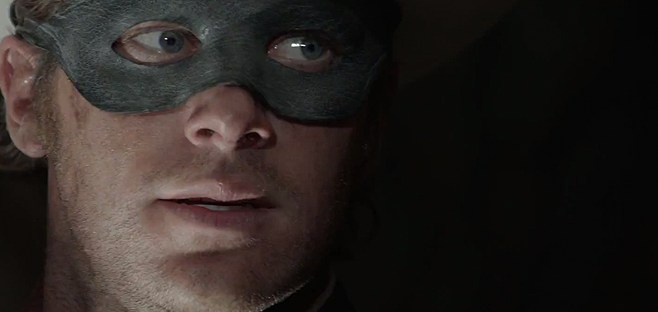
It’s not a great weekend to be Armie Hammer. His new film, The Lone Ranger, was DOA at the box office. Worse even, he’s likely to be scapegoated for the failure.

After all, director Gore Verbinski and co-lead Johnny Depp have been bringing in the big bucks for years. It’s not as if their partnership could be going the way of Depp’s partnership with director Tim Burton — no, you can put safe money that Hammer is going to be taking the fall for this one. While that’s disappointing, it was also totally foreseeable.

The problems with The Lone Ranger have been noted sufficiently already — suffice it to say Depp playing a Native American character in a mostly dead property was clearly never going to be a winner. But as scandalous as the Depp cast may have been, it was the choice of Hammer as the titular Ranger that puzzled me most.

Hammer has been in two films of real note: The Social Network, in a supporting role (that he was good in), and Mirror Mirror, which was all sorts of terrible (and he did nothing to save). Giving him his own franchise should have given all the Hollywood executives involved pause. He was an admittedly good-looking guy who has made nothing more than a minor splash at best in his previous work. What did execs see in him?

To be blunt: they saw a man’s man. And Hollywood is convinced it’s short on those.

Simply put, execs are obviously tired of the boyish male stars that dominated the late Aughts. Most big action tentpoles are being given to the same older stars who made their careers on such films, Jason Statham and The Rock being archetypal examples. Even Vin Diesel is bleeding the Fast & Furious franchise dry. Older actors previously unassociated with the action game are even getting into it — coming to theaters near you soon enough, Liam Neeson in Taken 14.

But Hollywood needs younger hypermasculine stars to fill these roles as the current crop gets older. Think about it: Chris Evans and Chris Hemsworth are tied up in being Avengers (Hemsworth also wrapped up in the female-skewing Snow White and the Huntsman frachise) and likely will be for years. Jeremy Renner is too, and he’s also failed at the franchise game already (his Bourne film didn’t exactly hold up to the titular Legacy). And while Chris Pine might do fine work in his own franchise, he’s never managed to truly break out.

So Hammer was chosen to fill that “four-quadrant man” role: the type of action star who can headline a big franchise and be a romantic lead, too. On that, look no further than his sex-obsessed interview with Playboy, where he couldn’t stop talking about all his inventive lovemaking with his wife. That was such a bizarre move — off-putting for its bluntness and his unattainablity alike — that I’m convinced it was a miscalculation on his publicist’s part in an attempt to make him a sex symbol.

Hammer’s quick falter is likely tremendously disappointing for execs, especially considering their wunderkind, Channing Tatum, was proven mortal last weekend when his White House Down opened to considerably less than expected. (It opened behind the female-driven The Heat, but of course, absolutely no one in Hollywood will pay attention to that lesson.)

None of this is fresh analysis — I’m just restating what has clearly been an issue for a while. But here’s a newer question: Why are execs so obsessed with recapturing the past?

There is nothing wrong with the boyish male star-dominated Hollywood. Arguably, that system works more effectively than the antiquated “four-quadrant man” strategy. Look at successes like this summer’s Now You See Me — a surprise hit by anyone’s definition. Sure, it may not have been marketed solely on the strength of star Jesse Eisenberg, but he’s prominent in ads, and it’s working. Or look at smaller movies like Juno (starring Michael Cera) or The Social Network (with Eisenberg and Andrew Garfield), which made big grosses on the back of great talent. The latter even got Garfield a superhero franchise — though how good he is as The Amazing Spider-Man is a different conversation entirely.

Visit any collegiate theatre arts program today, and you’ll notice that they’re not stacked with the next Tatums. Far from it — these are the next Garfields, the next Eisenbergs, the next Tellers. Hell, the next Neil Patrick Harris is out there, and his lack of success on the big screen isn’t due to a lack of charm or fanbase.

On Harris in particular: there’s another component worth its own blog post, and that’s Hollywood’s continued discomfort with gay leading men. Consider the strange recloseting of Luke Evans when he was promoting The Three Musketeers. Or the brazen rewriting of Tom Hardy’s history of having sex with men. As stated, this is all worth its own post, but it’s just food for thought as to how it relates to the greater theme that Hollywood thinks men must be traditionally masculine to be a star.

Regardless of all this, Hammer and, to a lesser extent, Tatum, may not be filling their potential up to Hollywood’s ridiculously high standard, but don’t expect them to stop getting cast. Execs have clearly made an investment, and they’re sticking with their new golden men — no matter how tarnished that gold may be, or how ineffective the strategy is.

Follow Kevin on Twitter at @kevinpokeeffe.

The Spirit of Whitney Houston Leads a Tour Down Wilshire Blvd.

Photo Credit: Tanja M. Laden

Originally published on Public Spectacle, LA Weekly’s arts blog. For original, please refer to: The Spirit of Whitney Houston Leads a Tour Down Wilshire Blvd. – Public Spectacle.

Good news: Whitney Houston is back from the dead. Bad news: she’s lost in MacArthur Park, presumably melting in the dark, and we’ll never have that recipe again, as the songgoes.

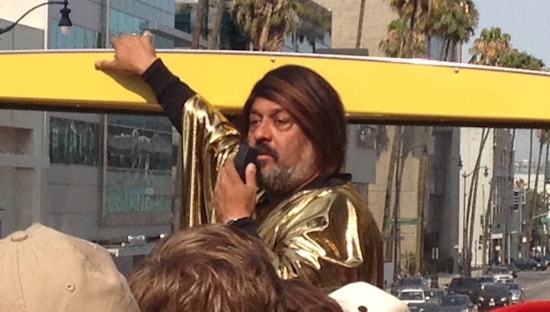
That is, at least, the impression left by the ending of It’s Not Right, But It’s OK, a performance art piece by Cliff Hengst put on by Machine Project for the Getty‘s initiative Pacific Standard Time Presents: Modern Architecture in L.A. The program was a bus tour from the Beverly Hilton, where the late diva supreme was found dead in Feb. 2012, down Wilshire Boulevard, as led by Hengst, “possessed” by Houston’s spirit. Yet Hengst, perhaps showing how committed he is to performance art, concluded the tour by running out into MacArthur Park to the strains of Houston’s hit song “Run to You.” Hengst/Houston never returned — instead, without a word from anyone in charge, the bus simply returned to the Beverly Hilton.

The conclusion was in the same spirit as the rest of the tour: mostly confusing, at times brilliant, and every so often in poor taste.

Hengst started out as himself — a veteran of one-person exhibitions — giving a tour of Wilshire Boulevard’s architecture and history. But then, in an impromptu performance of Weezer’s “Beverly Hills,” Hengst began riffing and ad-libbing, much like Houston might in a cover of the song. He claimed he has no idea what came over him.

Soon enough, the transformation became more permanent. To the strains of Houston’s cover of the National Anthem, Hengst threw on a gold lamé sheet (the term “dress” would be generous) and a truly pitiful wig to become Whitney Houston herself. It’s worth noting that Hengst has fairly prominent facial hair. Clearly, convincing drag was not the point.

The bus tour continued, with Hengst/Houston speaking and singing about her return to the world — and, bizarrely, delivering more history about Wilshire Boulevard. In some cases, this made sense: During a spiritual moment, Hengst/Houston lip-synched the religious “I Look to You,” and launched into the intro of “I Will Always Love You” from The Bodyguardwhen gazing at the Academy of Motion Picture Arts and Sciences.

At other times, however, the music seemed incredibly disconnected from everything else: Zooash’s mashup of “How Will I Know” with Robyn’s “Dancing On My Own” was played at a moment where Houston was supposed to be reflecting on a memory of her first tour, making a remix an odd choice.

When the music stopped, things got dicey. A running gag about how many Subway locations are on Wilshire had some fun payoffs (choice sung line: “Subway, where salted meats go to die”), but otherwise, Hengst mostly read facts about buildings, only occasionally tying in relevance to Houston.

More than anything else, that was what kept It’s Not Right, But It’s OK from being the campy blast it so thoroughly wanted to be. Perhaps because of the program’s tie-in with the Machine Project’s event series “Field Guide to L.A. Architecture,” Hengst had to shoehorn in references to buildings that Houston just wouldn’t care about, often at the sacrifice of some great performance bits — a crazy, drug-fueled monologue/performance of “Exhale (Shoop Shoop)” was cut short because yet another building had to be pointed out.

Still, there was plenty to learn on the tour, both about Houston and Wilshire, and there were some really harmonious moments. For example, the El Rey Theatre, itself a landmark, was also the location of Houston’s first tour, opening for Luther Vandross. And if nothing else, the tour had great comedy, especially when Hengst would veer off-script and interact with passers-by.

Plus, at moments, the juxtaposition of Houston’s life-after-death and the architecture of Wilshire worked. The former location of the Ambassador Hotel was highlighted, and drew an interesting parallel to the Beverly Hilton, where Houston died, as the Ambassador, of course, was the site of Bobby Kennedy’s death. (The use of “I Have Nothing” here was particularly effective.)

The Ambassador itself died as well, as did so many other locations Hengst/Houston highlighted. Other locations that didn’t get torn down either faced death (The Wiltern, twice) or were dramatically changed (too many locations to list). Houston may have passed just over a year ago, but she left an L.A. that was much different than she lived in — just as the Houston who left us was much different than how she would likely want to be remembered.

That theme felt half-baked, though, as did the rest of the show. A one-day-only engagement, It’s Not Right, But It’s OK didn’t have to be a program that would sell tickets for years — the audience was going to buy tickets if they were interested in the source material, not on the actual execution of the program. But Houston’s death is still fairly recent; using her memory as a tie-in for a tour of Wilshire’s architecture at times felt in bad taste.

Case in point: the ending, where Hengst/Houston runs into MacArthur Park, a location known for its strong gang presence and drug-dealing. The tone is unclear: Are we supposed to laugh at the fact that Houston has “returned” to the drugs and shady dealings that colored the latter half of her life? If so, that’s the kind of dark joke that, were Houston still alive, would probably get big laughs if converted into a standup bit. But as the conclusion to what at many points felt like a tribute to the musical icon, it felt tacky and unnecessary.

That’s what made It’s Not Right, But It’s OK neither right nor OK. Neither fully camp nor a true tribute — nor even a proper education about Wilshire — it just never truly came together.

Teen Wolf Gives ‘Gay-Friendly’ a Furry Face

No show makes me feel so absurd by loving it than Teen Wolf does. A wall-to-wall celebration of beefcake, melodrama and more supernatural than I’ve ever wanted in a TV show, the MTV series based off the Michael J. Fox ’80s flick is made for GIF walls and Tumblr shrines – not usually my deal.

But what started as a guilty pleasure (and thanks to many critics comparing it favorably to another great MTV show, Awkward) has ended up with me obsessively keeping up with teenaged lycanthrope Scott McCall (Tyler Posey) and his merry band of fellow friends and wolves completely guilt-free. And all of it is owed to one man: Creator Jeff Davis, who has cultivated the gay-friendliest show on television.

Continue reading

Cease-and-desist letter protests use of ‘CollegeFest’ trademark

Originally published in the Los Angeles Loyolan. For original, please refer to: Cease-and-desist letter protests use of ‘Collegefest’ trademark – Los Angeles Loyolan.

A cease-and-desist letter was sent to LMU’s Office of the President from CollegeFest Promotions LLC on Thursday demanding the University stop using the name “CollegeFest.” Despite the letter, which was also sent to the Loyolan and senior sociology major and ASLMU President Vinnie Caserio, a video post on ASLMU’s Facebook page this weekend referred to the March 24 on-campus event as “CollegeFest.”

The letter, signed by Adam Paget, legal counsel for CollegeFest Promotions, claims the company owns the trademark “COLLEGEFEST” and that the name “has become famous, and consumers recognize this mark as a distinctive indicator of our client’s high-quality services.” Because of this, the letter alleges, LMU’s use of the name CollegeFest is an infringement and violates several laws, including the federal Lanham Act.

CollegeFest Promotions’ letter states that the company, a subsidiary of the larger Mr. Youth LLC, has used the CollegeFest trademark, for years to promote events, including an over-25-year-old Boston-based event called simply CollegeFest. Coincidentally, the 2010 CollegeFest in Boston featured a performance from this year’s LMU CollegeFest headlining act, Chiddy Bang.

Paget demands in the letter the cessation of “any and all use of the COLLEGEFEST name and mark … in any and all materials [and] in all formats,” asking for confirmation of this by next Tuesday, March 19. If LMU does not stop using the name CollegeFest, the letter concludes, “we will have no alternative but to take all steps necessary to preserve and protect our rights without further notice to [the University].”

At approximately 10:55 p.m. Friday evening, ASLMU published a YouTube video titled “LMU CollegeFest 2013” to its Facebook page (see image). The video, posted by an account called “TheASLMU,” was accompanied by a statement annoucing “ASLMU Presents: CollegeFest 2013.” ASLMU’s website, Facebook page and Instagram account all continue to feature the poster for the event, which refers to it as CollegeFest.

A call for comment to the LMU CollegeFest coordinator, senior finance major and ASLMU Director of Performance Events Ashley Thompson, was not returned. Requests for comment to Paget, Caserio and ASLMU Adviser and Assistant Director of Student Leadership and Development Alexandra Froehlich were also not returned.