Call Me Maybe - Carly Rae Jepsen

2012 pop music: 2011 redux

Originally published in the Los Angeles Loyolan. For original, please refer to: 2012 pop music: 2011 redux.

Call Me Maybe - Carly Rae Jepsen

Photo Credit: YouTube | CarlyRaeJepsenVEVO

Summer has officially ended, and the popular consensus has arrived: Frequently parodied earworm “Call Me Maybe” by Canadian artist Carly Rae Jepsen is your Song of Summer 2012. By now, you’re probably just a little tired of listening to it – which is natural for songs that you hear almost every day for a full 3½ months. But imagine how Canadians must feel – they first heard the song in September of last year.

This highlights one strange trend that emerged this year with pop music being even more behind the times than usual. Both of the most popular songs of the year – “Call Me Maybe” and Gotye’s “Somebody That I Used to Know” – were actually released in 2011, as was the highest selling album of this year, Adele’s “21.” While radio is no stranger to late-peaking hits, it is strange for the gap to be almost a full year after release.

So how did we wind up with pop music in 2012 that was nothing more than 2011 redux? With Adele’s album, we can chalk her continued successes up to being Adele, the savior of modern album sales, and write it off as an aberration. But with “Maybe” and “Somebody,” trying to explain why only leads to more questions.

Both Jepsen and Gotye are from outside the country, which might explain why their songs didn’t make it here earlier. But if that’s the case, why did they become so big anyway?

The songs aren’t exactly the electropop dance songs or ringtone hip hop we’ve come to expect of the radio, so it might have taken them longer to catch on. But if that’s the case, why did they catch on anyway?

Big pop artists like Adele, Lady Gaga and Beyoncé stayed out of the singles game this summer, choosing not to release anything to radio. Compare that to the era of monster singles like “We Found Love” and “Someone Like You” at the end of last year, and it’s easy to see that there wasn’t room for Jepsen or Gotye until this year. But this summer brought big songs from the likes of Rihanna (“Where Have You Been”), Katy Perry (“Wide Awake”) and Maroon 5 (“Payphone”), yet the two scrappy upstarts still reigned supreme.

The best explanation I can come up with is that there is no explanation – at least, no simple one. “Maybe” and “Somebody” seemed to rise to prominence independently due to the promotion from their labels and other Internet success. Whereas Jepsen had Justin Bieber and all his famous friends on her side, Gotye had Walk off the Earth’s five musicians-one guitar viral cover. The songs’ 2011 roots seemingly had nothing to do with their success – all just a coincidence. However, when you realize that the third biggest hit of the year, fun.’s “We Are Young,” was also released in September 2011, you can’t help but feel you’re missing a pattern.

Pop music is obviously cyclical, and there are always going to be transition years. I’d chalk this year up to nothing but radio programmers trying to find a new sound as the dance revival is cooling down. We’ll see more songs in the next year or so mirror the sounds that Adele, fun., Jepsen and Gotye first made popular this year.

Until then, enjoy your last remnants of summer music, including Ellie Goulding’s “Lights,” a song peaking in popularity right now that was first released in – er, 2010. Back to the drawing board.

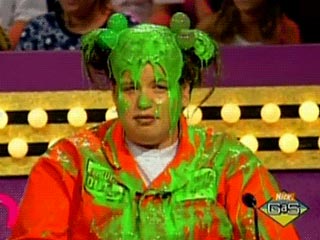
Figure It Out

Throwback Thursday: Summer, Slime and Lori Beth

Figure It Out

Photo Credit: Nickelodeon

In the late ’90s, Nickelodeon hatched what is one of the most brilliant cross-promotional schemes in modern history: Figure It Out. The game show starred panelists guessing the special talent of one particular kid, but in a twist, all the panelists were Nickelodeon personalities. The whole thing was entertaining on its own, but was also a half-hour advertisement for all the network’s other properties. In many ways, it was one of the first innovators of product placement.

Less cynically and post-childhood, I’d have said that Figure It Out was awesome. Hosted by former sports commentator and Olympic gold medalist (?!) Summer Sanders, the premise was simple and fun. There were lots of opportunities for slime, and almost every episode featured either future DUI magnet Amanda Bynes or the absolutely brilliant Lori Beth Denberg on the panel.

Denberg, if you recall, was the face of the “Vital Information” sketch on All That, and in that role, she defined much of my early childhood. The deadpan delivery, quick one-liners, absurdist premise: all of it was hilarious to me. I was the kind of kid that didn’t laugh too much at gross-out humor (I was a bit of a priss back then), but that was the exact kind of comic style I could appreciate.

On Figure It Out, Denberg was no less hilarious, and she was always a highlight, even when her panel was weighed down by losers like Danny Tamberelli. (Tamberelli was also Denberg’s absolutely miscast replacement on “Vital Information” – whoever thought that was a masterstroke of genius deserves the firing they inevitably received.) She had repartee with the other panelists and with Sanders, and she managed to make every joke land.

The Figure It Out era marked the end of Nick’s ability to really innovate with its programming. Nowadays, everything’s simply a spinoff of everything else, mirroring the Disney Channel formula. However, they’ve brought Figure It Out back, and while it’s not as amusing without the old panelists, the format is exactly the same, right down to the noise they play when someone gets an answer right. In this age of ’90s nostalgia and remakes that’s still winding down, it’s nice to see a rehash that really pays tribute to the original series.

Now, if only we could get Denberg and Sanders back on there. Below, check out one of the best Lori Beth Denberg episodes of Figure It Out.

Call Me Maybe - Carly Rae Jepsen

Summer 2012, Spotify’d

Call Me Maybe - Carly Rae Jepsen

Photo Credit: YouTube | CarlyRaeJepsenVEVO

It’s been a hotter-than-Hades summer in Austin, Texas, and I can’t wait to get back to the balmy 74º of Los Angeles. As I pack up everything and prepare to head home, take a trip with me through the music of my summer. If you’ve got Spotify (and you should), listen along!

Countdown – Beyoncé
Call Me Maybe – Carly Rae Jepsen
Both of Us – B.o.B. f/ Taylor Swift
Somebody That I Used to Know – Gotye & Kimbra
Brokenhearted – Karmin
Seven Devils – Florence + the Machine
Good Time – Owl City & Carly Rae Jepsen
Titanium – David Guetta f/ Sia
How We Do (Party) – Rita Ora
Volcano – Damien Rice
Video Games – Lana Del Rey
What Makes You Beautiful – One Direction
Nothing’s Real But Love – Rebecca Ferguson
Bottom of the River – Delta Rae
Miriam – Norah Jones
Break It Off – Rihanna & Sean Paul
I Don’t Like Mondays – Tori Amos
Blow Me (One Last Kiss) – P!nk
We Are Young (Acoustic) – fun. f/ Janelle Monáe
Settle Down – No Doubt

Ryan Lochte: The Flawed, Human Olympian

Originally posted on NextGenJournal.com. For original, please refer to: Ryan Lochte: The Flawed, Human Olympian – NextGen Journal.

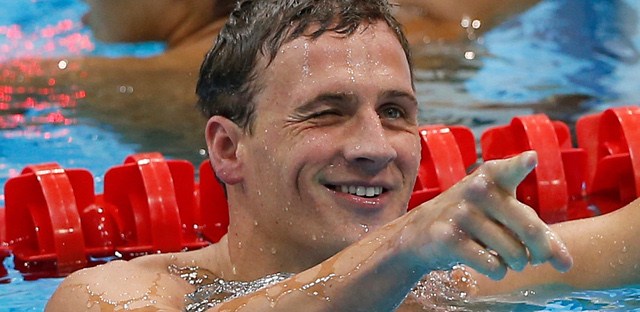
Since the Olympics ended just eight days ago, the conversation in most press circles (especially here atNextGen Journal) has been thoroughly transfixed on one particular Ryan. The resulting media circus has left almost no room to discuss another high-profile Ryan; that is, the gold medalist Olympian-turned-90210 guest starRyan Lochte.

While debating Paul Ryan’s Medicare position, his Ayn Rand-inspired launch into politics, or his lack of necktie at the VP announcement for the umpteenth time sounds like a load of laughs first thing on a Monday morning, I’d much rather focus on Lochte, the swimmer known more for his reputation out of the pool than in it. Lochte has drawn considerable criticism on the Internet both in and out of the games, and his desire to make a career in Hollywood has only increased the volume of the ire.

Most of the criticism is based around Lochte’s personality: He’s not exactly Mensa’s next top recruit, to say the least, and is widely ridiculed for his exclamations of “jeah” (which, as Jezebel’s Erin Gloria Ryan so brilliantly put it, is “like ‘yeah,’ but said in a way that indicates you may have difficulty pronouncing the ‘y’ sound and could benefit from working with a professional speech therapist”). He even says it in his aforementioned upcoming appearance on 90210, for which he is shirtless the entire time. You can’t say the man doesn’t know his audience.

His own mother thinks he has one-night stands. He’s been declared America’s Sexiest Douchebag. And he wears an absolutely ridiculous American flag grill. Lochte is, in many ways, the court jester of the Olympics: hilarious, but utterly harmless. So why does he get under our skin so easily?

Particularly in America, we elevate our Olympians into the realm of superheroes. They compete at the greatest level of athleticism and we worship them for it. Even the Olympians who screw up –think Michael Phelps and the bong – we forgive, because they’re the best we have. An Olympian who doesn’t stand up to our high standards and expectations is almost a does-not-compute situation: how can such a thing be?

So Lochte, who doesn’t give good interview sound bites, wouldn’t be the conventional choice to bring home to Mom, and is unapologetic about it all, defies the Olympic standard. The big question is: so what? Why should he have to be the idealized Olympian? His job is to swim well and represent our country, and he did that with aplomb. He was a gold medalist for Team USA, and what he does after that has nothing to do with him as an Olympian and everything to do with him as Ryan Lochte.

Not every athlete who competes at the Olympics is going to be a role model. Some of them are going to do stupid things not because they’re screw-ups, but because they’re human – a fact we often forget when thinking about our Olympic heroes. Lochte is making clear through his words and actions exactly the kind of man he is, and frankly, I applaud him for it. If he was attempting to project himself as something he’s not, that would be far more insulting to us as an American people. He’s comfortable with who he is, and as such, we should be comfortable with who he is, too.

Plus, if his career in Hollywood leads to more hilarious quotes like “Memorizing lines and trying to like say them and still do movement, that was hard,” I simply cannot wait for what he does next.

Give It To Me

Throwback Thursday: The “Timbo” Era

Give It To Me

Photo Credit: YouTube | TimbalandVEVO

The year is 2007. Britney Spears had yet to shave her head in the midst of her breakdown. Gossip Girl was set to debut that coming fall. And music producer Timbaland was the hottest thing in pop music.

Timbaland had been riding a wave of hype for the past year or so following the smash successes of Nelly Furtado’s album Loose and Justin Timberlake’s FutureSex/LoveSounds. That February, he released the first single off his album Shock Value: “Give It To Me.”

A beat-heavy track with guest vocals from Timberlake and Furtado, “Give It To Me” isn’t any of their personal best (especially not Timberlake’s), but in a lot of ways, it’s a perfect musical time capsule for the “Timbo” era.

Starting with “Promiscuous” in 2006, Timbaland took almost full control of the pop music scene, molding Nelly Furtado into a sexy songstress. Furtado left the “I’m Like a Bird” girl behind and embraced her identity as a desirable woman with the #1 hits “Promiscuous” and “Say It Right.” While she thrived, Timbaland also produced what many consider a pop masterpiece, Timberlake’s FutureSex/LoveSounds. Alone, these two achievements propelled Timbaland into the spotlight in a big way – his championing of OneRepublic and future hit single “Apologize” was just the icing on top.

“Give It To Me” was Timbaland’s first solo single since his weak efforts in the late 90’s – “solo” of course being a curious word when he has at least one featured artist on almost every single one of his tracks, and two in this one in particular. Timbaland and his pet projects each have one verse in the song. Furtado describes changing her artistic vibe on Loose. Timbaland describes his successes in production. Timberlake has perhaps the best verse, a kiss-off to anyone who made the “But sexy never left!” joke about his hit single “SexyBack.” “If sexy never left, then why’s everybody on my shi-i-i-t?” he sings. “Don’t hate on me just because you didn’t come up with it.”

In many ways, “Give It To Me” acts as an oral history of the Timbo era, and ironically, the era ended almost directly after the song faded from radio. Furtado has yet to enjoy a hit single or album after Loose and “Say It Right.” Even more disappointingly, Timberlake still has yet to record a follow-up to one of the most successful pop albums of all time, instead choosing to focus on his own career.

As for the hit producer himself, while Timbaland enjoyed minor success with “The Way I Are” and “Carry Out,” he became less and less the chief songwriter and producer of pop music.The man who replaced him? Interestingly, it was Ryan Tedder of OneRepublic – a project Timbaland himself fostered.

The Tedder era is another story for another Throwback Thursday. For now, enjoy reminiscing about the man and his artistic benefactors who, for a moment, ruled the world of pop.