Weird Kid

Quick Read: Weird Isn’t Okay, According to Oprah.com

Weird Kid

Photo Credit: Flickr Creative Commons

The past few years in America have caused the media to become a chanting chorus of anti-bullying messages. “I’m beautiful in my way, ’cause God makes no mistakes,” Lady Gaga sang in the (rejected?) gay anthem “Born This Way.” “Don’t you ever, ever feel like you’re nothing; you are perfect to me,” P!nk implored in “Fuckin’ Perfect.” “Do you ever feel like a plastic bag, drifting through the wind, wanting to start again?” Katy Perry queried in “Firework.” (Admittedly, some songs were more effective than others.)

With the It Gets Better campaign infecting all parts of the media, and especially shows like Glee, it’s very rare to see any arm of the press fall out of step with the vehement “Bullying isn’t okay; embrace who you are” message.

On the CNN.com homepage today is an article from Oprah.com entitled “How to deal with your kid’s weird friends.” Author Corrie Pikul describes the six different types of ‘weird’ kids your child might make friends with in school, and how to best deal with them. The piece itself isn’t the issue – though Pikul isn’t exactly setting the journalistic world on fire with this one – but in how she handwaves being able to call these kids weird.

“Your child is hilarious, interesting, clever—frankly, he’s all-around delightful,” she starts. “But his friends are …well, we’re all adults here, so let’s just come out with it: Some of them are weird.”

I’m not quite sure what being adults has to do with it. Is name-calling okay at a certain age? Are we as adults allowed to call kids weird, but not each other? Can kids call us weird? It’s a very strange qualifier, and while I’m sure Pikul meant nothing by it, I have to wonder why maven of good feelings Oprah Winfrey’s website endorses something like this.

Not only that, but the position is kind of imperious and condescending. ‘My child is perfect, but look at all these other weirdos he has to put up with!’ If your child is hanging out with weird kids, chances are he’s a little weird, too. In fact, most kids are weird. Hence why I don’t want to have any of them. Maybe this piece would have been more useful if it was about dealing with your own child’s weirdnesses as well.

I’ve made my position on It Gets Better known, and let me just clarify that I personally have no problem with this. There are such things as weird kids. Like I said, I personally think most kids are weird. But this is such a strange piece simply because it’s so out of step with the rest of media’s pro-uniqueness message. Perhaps the anti-bullying wave is coming to a close once again?
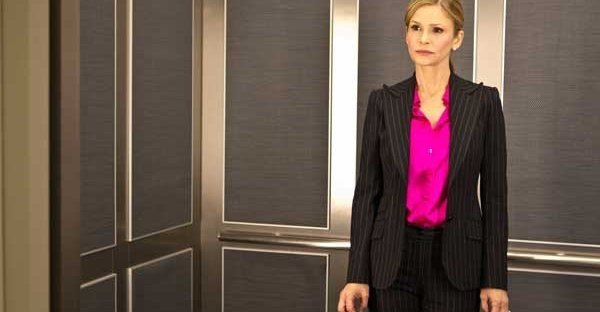
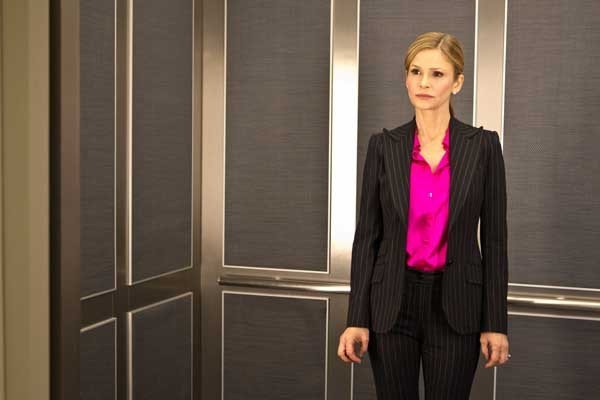
Brenda Leigh Johnson

Brenda Leigh Johnson, Feminist Icon

Brenda Leigh Johnson

Photo Credit: TNT

In 2005, TNT launched a new police procedural, their first major effort to create original programming on the network. That procedural was The Closer, starring film actress Kyra Sedgwick as tough-as-nails Deputy Chief Brenda Leigh Johnson, a transfer into the LAPD’s Priority Murder Squad (or Priority Homicide Division, as it was quickly changed to be called when Brenda wasn’t pleased with the ‘PMS’ stationery).

From the pilot onwards, it was evident that this wasn’t your typical procedural. Sure, there was an investigation every episode of a new case, a cast of diverse cops, dramatic confessions, etc. But Brenda was a character in every sense of the word. Her background was explored and she was given a colorful identity, something that can’t be said for the leads on most cop shows. We got to see Brenda at her weakest (eating chocolate) and her strongest (interviewing suspects) equally, and we got to see her fall in love with and eventually marry Special Agent Fritz Howard of the FBI (Jon Tenney) while fighting old feelings for Assistant Chief Will Pope (J.K. Simmons). All of this wouldn’t have worked, of course, if Sedgwick hadn’t brought such life and wonder to the role.

Not only was Brenda wonderful, but her supporting cast became more and more fleshed out with each episode as well. Starting in season two, light-hearted episodes showcasing the antics of Lieutenants Andy Flynn (Tony Denison) and Louie Provenza (G.W. Bailey) became a seasonal treat, and later season plots about Detective Julio Sanchez (Raymond Cruz) watching his brother die and Sergeant David Gabriel (Corey Reynolds) physically attacking a child molester added dramatic gravitas.

The Closer wasn’t always a great show — it especially started to sag in season four, when the premise became tired and Brenda’s relationship with Fritz became more about bickering and less about loving moments. The show revitalized itself in season five, however, when it introduced Captain Sharon Raydor of the Force Investigation Division (Mary McDonnell), a worthy adversary for Brenda. What was originally supposed to be a three-episode gig became a regular role by the show’s final season for McDonnell as fans relished in the two women’s stubborn rivalry.

Last night, The Closer signed off and Major Crimes signed in with mixed results. While The Closer‘s finale was certainly emotional with Brenda and Sedgwick departing for good, it was anticlimactic, as Major Crimes involves almost the exact same team, simply with Raydor at the helm. While she makes a brilliant antihero, Raydor is hardly a sympathetic protagonist, and the chemistry of the show is a little off. Time will tell if it can recalibrate itself and become popular, but Major Crimes feels like nothing but an attempt to extend the brand without Sedgwick.

The problem is that the brand is Sedgwick. Without her, The Closer would have ended early on as a forgettable TNT procedural. Instead, it thrived, and inspired scores more female protagonists who weren’t syrupy sweet and weak all the time. Glenn Close on Damages. Julianna Marguiles on The Good Wife. Holly Hunter on Saving Grace. Claire Danes on Homeland. None of these portrayals would have been fathomable in a world where The Closer and Sedgwick didn’t break the glass ceiling first. For that, television and women across the country owe much to the Southern drawl and steely tenacity of Brenda Leigh Johnson.

Perhaps Brenda and Sedgwick will show up on an episode of Major Crimes at some point – and what a thrill that would be to hear that Southern-sweet “Oh, for heaven’s sake!” again – but frankly, I’m happy with where we’ve left Brenda. She left the department to focus on her family after capturing her toughest suspect ever. She was fulfilled. And thanks to her, so are millions of women who enjoy quality female protagonists every week.

I salute you, Brenda Leigh Johnson. As you would exclaim every episode, “Thank you so much!”

How the Other Half Loves

Cast and staging appeals in ‘How the Other Half Loves’

Originally published in the Los Angeles Loyolan. For original, please refer to: Cast and staging appeals in “How the Other Half Loves” – Los Angeles Loyolan.

How the Other Half Loves

Photo Credit: Kevin Halladay-Glynn | The Los Angeles Loyolan

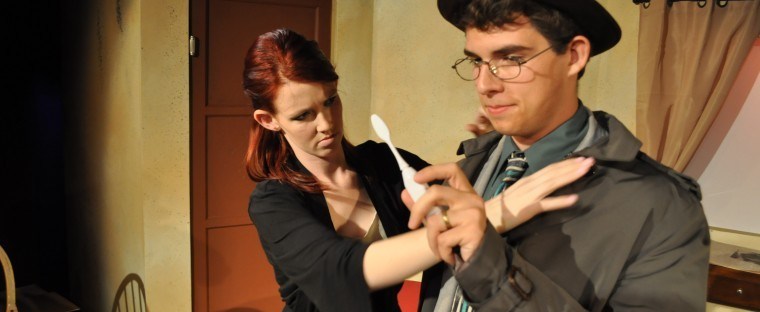
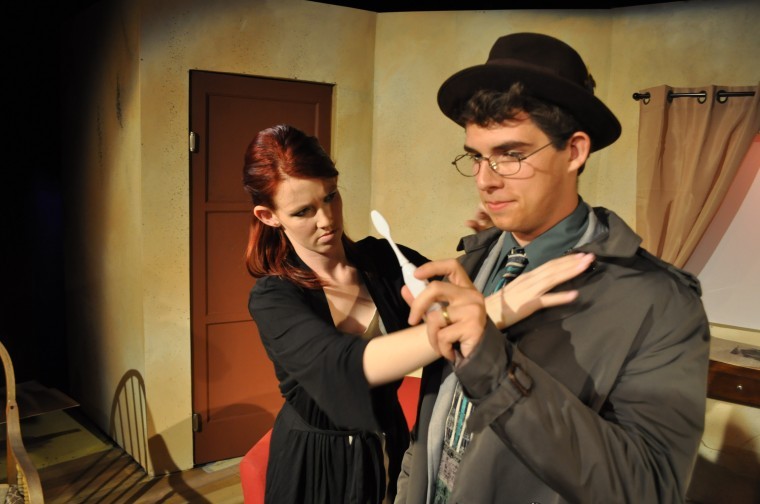
The art direction of a play can vary from something spectacular and opulent to a bare stage, but it’s rare that the stage itself is one of the most fascinating parts of a production. In “How the Other Half Loves,” the Del Rey Players’ newest show currently on stage in the Del Rey Theatre, the set is not only crucial, but it keeps the pace lively and stages the characters against each other in a unique and fascinating fashion.

While the staging is fantastic, the show is more than just its set. Hilarious, lived-in performances and a sharp pace make this show an impressive feat and a thrill to experience. Director Joe Hospodor, a junior theatre arts major, has achieved a trifecta of able direction, great set design and universally strong performances to create a portrait of domestic life that doesn’t sacrifice the humanity of its characters in search for a laugh.

The setup is simple enough: Two couples in the early ‘70s occupy opposite sides of the wealth spectrum. Frank and Fiona Foster (freshman theatre arts major Ben Szymanski and sophomore theatre arts major Paulina Fricke) are comfortable; Bob and Teresa Phillips (senior theatre arts and political science double major Rechard Francois and sophomore theatre arts major Mackenzie Ward) are less than wealthy. The primary conflict comes from Fiona and Bob’s off-stage affair and the troubles in the Phillips’ marriage.

From that central point, countless misunderstandings and awkward confrontations spur the action, and a third couple, William and Mary Detweiler (sophomore theatre arts major Kent Jenkins and senior theatre arts major Ashley Donnert) are thrown into the fray to further complicate matters. The play itself, written by playwright Alan Ayckbourn, is cute, but hinges so much on the characterization and the actors’ timing to sell the comedy.

On that front, the cast delivers in droves. This sextet of performances deserves a place in the (sadly non-existent) LMU Theatre Arts Hall of Fame – truly, this is an ensemble without weak points. As the Phillips, Francois and Ward strike the perfect balance of hate/love chemistry. Ward’s drunk and angry wife could have easily become unlikable and ventured into ‘shrill harpy’ territory, but she stays hilarious and never lets you forget that she’s truly the victim in the messy web of relationships.

Jenkins and Donnert should be given the greatest of ovations for their pitch-perfect performances as the Detweilers. From first entrance to the crucial dinner scene, where they have to essentially act in two scenes at once, the pair is flawless. Jenkins has appeared in several productions during his two years at LMU, but no director before Hospodor has harnessed his lovable, dork energy anywhere near as effectively. Donnert steals every scene she’s in, playing Mary as a meek mouse who always seems to want a way out of the crisis.

Fricke and Szymanski have arguably the hardest task of any of the actors: The Fosters are by far the most detached of any of the couples despite their picture-perfect marriage. Fiona is a particularly difficult character to make human amidst her seeming disregard for her husband and icy interactions with Teresa. However, Fricke succeeds at making her more than an alpha bitch. Szymanski is pulling nothing less than Herculean duty in selling the comedy of his character. Almost everything he does physically and with his voice when delivering a joke slays his audience. He has a gift for comedy, something Hospodor was incredibly smart to notice.

From start to finish, the production just runs like a well-oiled machine. The staging, with both main rooms on one set, allows for giant portions of the show to flow uninterrupted and keep the energy high. The costume design is clever and period appropriate, with the color choices of particular note. The lighting, while simple, does its job – there are a few dramatic moments that heighten the suspense thanks to a smart change in color or intensity.

The show isn’t perfect: The quick dialogue sometimes causes the actors to trip over their words. But the show is hardly hindered by its small flaws. In fact, it seems all the more real.

“How the Other Half Loves” is not an epic with massive sets and a veritable truckload of cast members, but it doesn’t need to be. It accomplishes so much with six skilled performers and a stage that pushes the storytelling into a new realm. Hospodor directs every aspect of the performance to the brink of perfection and often manages to push it there. It is a truly appealing production and a joy to watch.

Four showings of “How the Other Half Loves” remain this Wednesday through Saturday at 8 p.m. each night. Tickets can be bought through the Central Ticketing Agency.

A Separation

Iranian film is relatable despite subtitles

Originally published in the Los Angeles Loyolan. For original, please refer to: Iranian film is relatable despite subtitles – Los Angeles Loyolan.

A Separation

Photo Credit: YouTube | iranianfilmfes

Living in Los Angeles allows better access to independent and limited release films than almost anywhere else in the country. It’s that sort of access that allowed me to see “Black Swan” on its opening day in 2010. Such opportunity is a gift, but it doesn’t allow residents of the City of Angels to see absolutely everything.

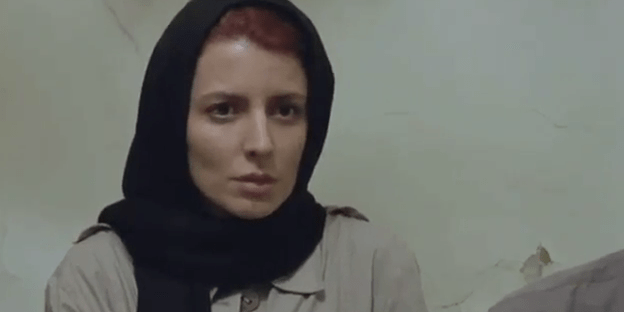
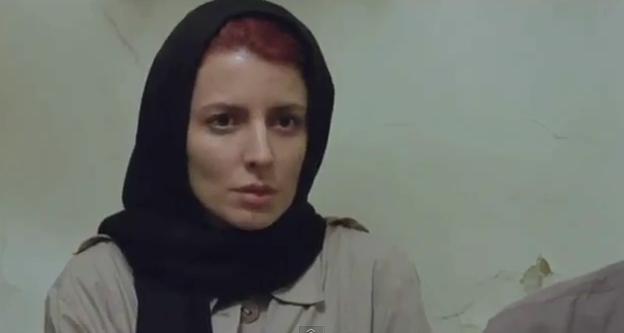
Case in point: I saw the best film of 2011 in March of 2012. The movie was “A Separation,” an Iranian film that just recently won an Oscar for Best Foreign Language Film. The story follows a couple that goes through a divorce and a legal battle with hired help simultaneously. It is, in almost every way, a perfect film, yet because of its status as a foreign film, not to mention an Iranian film, I couldn’t see it until almost two months after 2011 had ended. Those in other cities may never get the chance to see it in theaters.

“A Separation” is a wrenching portrait of a family falling apart, as well as the greatest legal thriller I’ve ever seen. The screenplay and direction, both by Asghar Farhadi, are superb in equal measure. The ensemble of talent is worthy of the masterful film it inhabits. The plot is irresistibly human and relatable. It is only foreign through its language – the story could be told about any culture or any family.

This isn’t the first example of a good film getting lost in translation when distributed in the U.S. With very few exceptions, including Ang Lee’s “Crouching Tiger, Hidden Dragon” and this year’s Best Picture Oscar winner, “The Artist” (a French film, albeit with several American influences), international movies are constantly relegated to the foreign dumpster despite easily relatable themes largely because American distributors are convinced that the language barrier will simply be insurmountable.

Unfortunately, those distributors are proven right time and time again by American audiences that would rather see sequel upon “threequel” instead of fascinating stories that happen to be in different languages. It’s a shame that so many in America and beyond won’t get to see “A Separation,” for example, because it has so much to offer, not only to fans of foreign cinema, but to general audiences everywhere.

That’s where the “foreign” label really fails: it creates a barrier between its American audience and the film itself. A story like “A Separation” would work in any language because it’s so relatable – yet the subtitles at the bottom of the screen drive away audiences.

It’s likely that “A Separation” will see some success thanks to the publicity generated on Oscar night. Rentals of the DVD will probably be quite high for some time on Netflix. A story this great deserves better than that, though. It deserves a place among the classic titles we all regard so highly. It deserves a wide audience and huge grosses. It deserves so much more than it will ever get simply because it’s a human story told in a different language.

Since we do live in Los Angeles, “A Separation” is still playing in several art house theaters around the city, including Laemmle’s Royal Theatre on Santa Monica Boulevard less than 10 miles from LMU. If you have the time, do yourself a favor and go see it. You likely won’t get the chance to see such a compelling, heartbreaking story from American cinema any time soon.

Oscar

Predicting the Oscars against the odds

Originally posted as part of Road to the Gold, an Oscar blog on LALoyolan.com. For original, please refer to: Road to the gold: Predicting the Oscars against the odds – Los Angeles Loyolan.

Oscar

Photo Credit: Flickr Creative Commons

The months of anticipation and blind predictions come to a head this Sunday at the Academy Awards. Amateur and professional prognosticators alike await the Oscars like it’s Hollywood’s holy night. No more second-guessing – the predictions are locked in and all one can do is wait.

While the show itself is likely to be fun and full of good speeches by winners in pretty dresses and sharp tuxedos, the real thrill comes from seeing how well you could read the cards and anticipate who the victors will be. So often, prognosticators will be proven wrong. Occasionally, they’ll be very right. But it’s always an anxiety-filled experience waiting for each of the envelopes to be opened.

Most who attempt to predict what and who will win stick to the eight primary categories: Best Director, Writing (original screenplay and adapted screenplay), all four acting categories and Best Picture. In that spirit, I present to you my predictions for the big races at this Sunday’s Academy Awards.

BEST ORIGINAL SCREENPLAY

I’d love to see Kristen Wiig and Annie Mumolo’s sharp “Bridesmaids” script take the win. It’s so rare to see comedy recognized at the Oscars, but the screenplay about seven different women and one ridiculous wedding party deserves recognition. That said, I don’t think anything can beat Woody Allen’s “Midnight in Paris” screenplay.

BEST ADAPTED SCREENPLAY

Three of the nominees here are also nominated for Best Picture. While the “Hugo” screenplay is larger than life and Aaron Sorkin and Steve Zaillian crafted a really smart script for “Moneyball,” look no further than the rich complexities in the simple subject of “The Descendants” to take the gold.

BEST SUPPORTING ACTOR

“Drive” star Albert Brooks was the major snub here when nominations were announced – the race without him is far more boring. Christopher Plummer (“Beginners”) is the only one with any traction here. The Oscar is his.

BEST SUPPORTING ACTRESS

A Melissa McCarthy (“Bridesmaids”) win would be utterly fantastic, but I think another comedienne, Octavia Spencer, is a lock for “The Help.” If the Academy is overcome in their love for “The Artist,” however, a surprise win for Bérénice Bejo is possible.

BEST ACTOR

This race is between the movie star playing an unknown (George Clooney, “The Descendants”) and the unknown playing a movie star (Jean Dujardin, “The Artist”). As with Best Supporting Actress, an “Artist” sweep could prove beneficial for Dujardin, but Clooney has been racking up most of the early awards. Still, I’d give the edge to my personal favorite in the category: Dujardin.

BEST ACTRESS

Just four years ago, Meryl Streep and Viola Davis acted together in “Doubt,” and now the two actresses and friends are the frontrunners for Best Actress. They’ve each won a sizable amount of precursor awards so neither has the distinct advantage. I’d give the edge to Davis, but never count Streep out – she hasn’t won this specific honor in 29 years and some circles consider her overdue.

BEST DIRECTOR

Very rarely does Best Director award anyone other than the helmer of the Best Picture, but if there is a split, expect Martin Scorcese to win here for “Hugo.” The smart money’s on French director Michel Hazanavicius for “The Artist,” however.

BEST PICTURE

This is a race between four films: “The Artist,” “The Descendants,” “The Help” and “Hugo.” “The Artist” is the frontrunner, but not everyone is as enamored of the silent film as I am. “The Descendants” is not a favorite of mine, but a lot of people appreciate the complexity of the script and Alexander Payne’s direction. “The Help” is celebrated by actors but might lack the support in the technical fields. “Hugo” is a marvel in 3-D, but voters get 2-D screeners and the film doesn’t lend itself to the simpler format. Ultimately, look for “The Artist” to capitalize on the love for cinema permeating this year’s nominee and its impressive precursor award streak. It should win and it will.