The Power Rangers Project: Revisiting a Childhood Obsession After 20 Years on the Air

Photo Credit: Saban Brands

Photo Credit: Saban Brands

We all had our obsessions growing up. Some were Trekkies. Some collected a lot of Beanie Babies. Some wanted to be a Pokémon Master and catch ’em all.

Me? I was obsessed with Power Rangers.

Yes, the Power Rangers! The candy-colored superhero teams who fought bravely to save the world from evil witches and monsters. The series that featured earnest lessons about public service and staying in school in the same episode as a fight between a giant dragon mecha and a sphinx beast. Power Rangers was cheesy, earnest and awkward, and it was The Best.

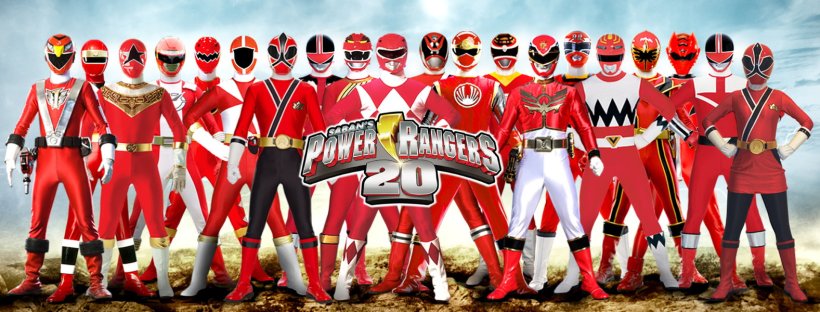
Then I saw the above photo somewhere online, celebrating the Rangers’ 20th anniversary with a collection of every Red Ranger in series history. Said discovery made me feel a wave of emotions: “Why am I so old? Wow, I can’t remember the last time I watched an episode of Power Rangers. God, I’m really old. Some of these suits look ridiculous. Wait, there was a female Red Ranger? I’m SO old!”

Then I started doing some digging, and wow, this show has been through some production struggles. Originally a Saban Entertainment property, Disney bought the rights to produce and air the series during the Wild Force season, then moved production to New Zealand because it was cheaper. They also tried to cancel the series at a couple different points. After  Power Rangers RPM, Saban bought the rights back, and since then, the show has been airing on Nick. During all that drama, there were tons of teams, tons of Rangers and so much I missed out on!

Inspired by the series’ 20th anniversary, and the presence of every single episode on Netflix Instant, I’m going to spend the next month-plus revisiting the Rangers, one season at a time. Some of these seasons I know well – Power Rangers in Space was my absolute favorite back in the day – while others I never saw (basically everything past when Disney took over producing the show) or can barely remember (apparently I watched Lightspeed Rescue? I’ve no idea what that was about).

To do this, I will be watching one episode of each series and doing a write-up on it. I’m hoping the commentary will be in the same spirit as the series: fun and goofy, but with heart and a sincere enjoyment of what I’m watching. Couple things:

  • I’m gonna try to stick to very typical episodes – nothing with new Rangers being introduced or battles with major villains. This isn’t going to be easy in later seasons, since I don’t really know what’s important or not, but I’ll be going off episode descriptions.
  • I’m not treating Mighty Morphin Alien Rangers as its own season. It was 10 episodes long, it was basically a miniseries in the middle of Mighty Morphin Power Rangers season 3 and I remember hating it when I first watched it.
  • I won’t be publishing on any sort of schedule – expect a lot of posts early, then petering out as we get into seasons I don’t know.

All that said, I’ll also update this post with links to all the others as I go. This should be fun – I love a good blast of nostalgia, and I hope y’all do too.

With that said…

Mighty Morphin Power Rangers S1: “The Yolk’s On You!” (Episode 33)
Mighty Morphin Power Rangers S2: “Forever Friends” (Episode 37)
Mighty Morphin Power Rangers S3: “Another Brick in the Wall” (Episode 26)
Power Rangers Zeo: “Another Song and Dance” (Episode 45)
Power Rangers Turbo: Cassie’s Best Friend” (Episode 38)
Power Rangers in Space: “Silence is Golden” (Episode 35)
Power Rangers Lost Galaxy: “The Blue Crush (Episode 8)
Power Rangers Lightspeed Rescue: “The Fifth Crystal” (Episode 21)
Power Rangers Time Force“Time Force Traitor” (Episode 26)

UP NEXT: Power Rangers Wild Force: “Three’s a Crowd” (Episode 20)
Armie, Channing and the Four-Quadrant Man Problem

armie

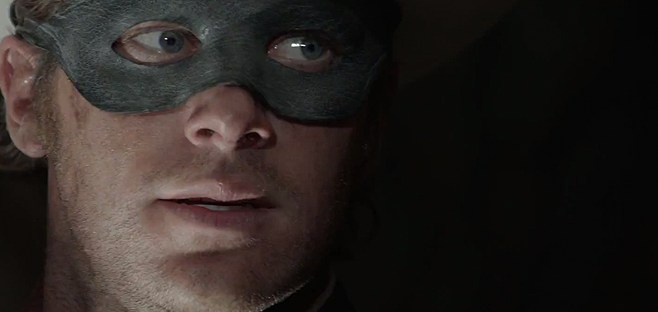
It’s not a great weekend to be Armie Hammer. His new film, The Lone Ranger, was DOA at the box office. Worse even, he’s likely to be scapegoated for the failure.

After all, director Gore Verbinski and co-lead Johnny Depp have been bringing in the big bucks for years. It’s not as if their partnership could be going the way of Depp’s partnership with director Tim Burton — no, you can put safe money that Hammer is going to be taking the fall for this one. While that’s disappointing, it was also totally foreseeable.

The problems with The Lone Ranger have been noted sufficiently already — suffice it to say Depp playing a Native American character in a mostly dead property was clearly never going to be a winner. But as scandalous as the Depp cast may have been, it was the choice of Hammer as the titular Ranger that puzzled me most.

Hammer has been in two films of real note: The Social Network, in a supporting role (that he was good in), and Mirror Mirror, which was all sorts of terrible (and he did nothing to save). Giving him his own franchise should have given all the Hollywood executives involved pause. He was an admittedly good-looking guy who has made nothing more than a minor splash at best in his previous work. What did execs see in him?

To be blunt: they saw a man’s man. And Hollywood is convinced it’s short on those.

Simply put, execs are obviously tired of the boyish male stars that dominated the late Aughts. Most big action tentpoles are being given to the same older stars who made their careers on such films, Jason Statham and The Rock being archetypal examples. Even Vin Diesel is bleeding the Fast & Furious franchise dry. Older actors previously unassociated with the action game are even getting into it — coming to theaters near you soon enough, Liam Neeson in Taken 14.

But Hollywood needs younger hypermasculine stars to fill these roles as the current crop gets older. Think about it: Chris Evans and Chris Hemsworth are tied up in being Avengers (Hemsworth also wrapped up in the female-skewing Snow White and the Huntsman frachise) and likely will be for years. Jeremy Renner is too, and he’s also failed at the franchise game already (his Bourne film didn’t exactly hold up to the titular Legacy). And while Chris Pine might do fine work in his own franchise, he’s never managed to truly break out.

So Hammer was chosen to fill that “four-quadrant man” role: the type of action star who can headline a big franchise and be a romantic lead, too. On that, look no further than his sex-obsessed interview with Playboy, where he couldn’t stop talking about all his inventive lovemaking with his wife. That was such a bizarre move — off-putting for its bluntness and his unattainablity alike — that I’m convinced it was a miscalculation on his publicist’s part in an attempt to make him a sex symbol.

Hammer’s quick falter is likely tremendously disappointing for execs, especially considering their wunderkind, Channing Tatum, was proven mortal last weekend when his White House Down opened to considerably less than expected. (It opened behind the female-driven The Heat, but of course, absolutely no one in Hollywood will pay attention to that lesson.)

None of this is fresh analysis — I’m just restating what has clearly been an issue for a while. But here’s a newer question: Why are execs so obsessed with recapturing the past?

There is nothing wrong with the boyish male star-dominated Hollywood. Arguably, that system works more effectively than the antiquated “four-quadrant man” strategy. Look at successes like this summer’s Now You See Me — a surprise hit by anyone’s definition. Sure, it may not have been marketed solely on the strength of star Jesse Eisenberg, but he’s prominent in ads, and it’s working. Or look at smaller movies like Juno (starring Michael Cera) or The Social Network (with Eisenberg and Andrew Garfield), which made big grosses on the back of great talent. The latter even got Garfield a superhero franchise — though how good he is as The Amazing Spider-Man is a different conversation entirely.

Visit any collegiate theatre arts program today, and you’ll notice that they’re not stacked with the next Tatums. Far from it — these are the next Garfields, the next Eisenbergs, the next Tellers. Hell, the next Neil Patrick Harris is out there, and his lack of success on the big screen isn’t due to a lack of charm or fanbase.

On Harris in particular: there’s another component worth its own blog post, and that’s Hollywood’s continued discomfort with gay leading men. Consider the strange recloseting of Luke Evans when he was promoting The Three Musketeers. Or the brazen rewriting of Tom Hardy’s history of having sex with men. As stated, this is all worth its own post, but it’s just food for thought as to how it relates to the greater theme that Hollywood thinks men must be traditionally masculine to be a star.

Regardless of all this, Hammer and, to a lesser extent, Tatum, may not be filling their potential up to Hollywood’s ridiculously high standard, but don’t expect them to stop getting cast. Execs have clearly made an investment, and they’re sticking with their new golden men — no matter how tarnished that gold may be, or how ineffective the strategy is.

Follow Kevin on Twitter at @kevinpokeeffe.

Bigelow and Boal’s Twin Protagonists

Watching Zero Dark Thirty for the first time, I was fully invested in the story of the hunt for Osama Bin Laden. As a docudrama about one of the most formative events in our nation’s history, I was riveted. It was gripping.

And then, in the movie’s final moments, I realized it isn’t about that at all. It’s about one woman, Maya (Jessica Chastain), a character dancing between the lines of real and imagined. It’s about her drive to achieve her goal, her total devotion to her craft and her aimlessness upon realizing that she had finally achieved what she had spent her whole life doing. As she says to her boss over lunch when asked what else she’d worked on besides Bin Laden in her career at the CIA:

“I’ve done nothing else.”

Spoilers from here on out on both Zero Dark Thirty and “The Hurt Locker.”

The line almost feels comic when first delivered – Maya is portrayed as hellbent on her goal, and though effective, her methods sometimes trend toward the ridiculous. Of course she’s done nothing else! Then, in the final scene of the film, we see Maya shed tears when asked the one question – perhaps in her entire life – that she’s been unable to answer:

“Where do you want to go?”

Maya is a woman recruited right out of high school and trained her entire life for one goal: the hunt and capture of Osama Bin Laden. She has, quite literally, nothing else: no friends, no notable family, no goal. She’s a dog who has finally caught her tail: what now?

Chastain plays the final scene beautifully, almost gasping for breath through the tears, in utter disbelief that she’s reached this point in her life. It’s reminiscent of another scene in another Kathryn Bigelow/Mark Boal collaboration, The Hurt Locker.

Much like Maya in ZDT, the protagonist of The Hurt Locker is single-minded in his ambition and goals. Sgt. William James (Jeremy Renner) is an adrenaline addict who is the best at what he does: deactivating live bombs. The most intense situations don’t faze him. But a simple trip to the grocery store after returning home to his wife and child perplexes him. He can’t handle being bored, and ordinary life bores him. So he reenlists so he can continue his live-wire work.

Maya and James are both fascinating characters not despite what we don’t know about them, but because of it. We don’t learn about James’ family until the very end of the film, but we’re never given more information about him than is necessary. Maya is a total blank slate, to the point where she appears to be nothing but a cipher for the film’s plot. Then, of course, you realize exactly how pertinent she’s been the whole time.

Bigelow and Boal are an interesting partnership, because they work on a similar wavelength. Both like logical, journalistic story settings, but both appreciate having a flesh-and-blood, relatable character at the center. Both embrace the best parts of docudrama while avoiding creating unemotional works. And both appreciate a tough-to-love character that is nonetheless utterly fascinating. It’s no wonder their collaborations have been so successful – and why Maya and James are so similar.

The two protagonists have much in common, and even their differences are telling – especially Maya’s lack of roots versus James’ family at home. At the end of the day, James would envy Maya; a rootless existence filled with nothing but dismantling bombs is his paradise. Similarly, Maya would prefer a world where she could chase Osama Bin Laden forever. Ultimately, however, James can reenlist, but Osama is dead, and Maya is left without any hope, completely unprepared for the world she hasn’t truly been in since high school.

Maya and James feel like spiritual twins, partners who might realize that they aren’t alone when recognizing their own traits in the other. Most importantly, they are the passionately beating hearts at the center of their films. Without those hearts, despite Bigelow and Boal’s best efforts, I think the films would have been so much less than they are. It’s easy to hope that Maya and James might be revisited in a future work, but I think I prefer my understanding of them still incomplete. It’s not what we know that’s most fascinating, after all – it’s what comes after.

Black Swan

Post Revisited: Reflections of Black Swan

Black Swan

Photo Credit: YouTube | FoxSearchlight

The PieceIt Just Wants to be Perfect
Original Publication: Awkward is What We Aim For
Date of Publication: December 10, 2010

Background: From 2008 til 2011, I operated my own blog, Awkward is What We Aim For. While there are some things I really liked about it, ultimately it tread too much of the same ground as I eventually tread in my “It’s K-OK!” column for the Loyolan, so I let it fall into disuse after a while. Going back and reading it, I’m struck by how immature some of the writing is – if I ever go insane enough that I decide I want kids, AIWWAF is not going to be what I let them read first. Or ever.

However, there were a couple pieces I consider ‘important’ in my development as a writer, and I still hold them near and dear to my heart. So while these stories won’t be uploaded to KevinPatrickOKeeffe.com, I still want to revisit them.

Conception: I saw Black Swan on its official opening night: December 3, 2010. I had been dying to see it since the first trailer was released months before. You remember the one.


Still creepy.

I was blown away by the film, entranced by its tragic beauty. Even in the face of those who didn’t love it, I couldn’t help but rhapsodize about it on and on. Friends were getting overwhelmed when I’d talk to them about it, so I figured I should try and put my thoughts into writing. Thus “It Just Wants to be Perfect” was born.

Execution: What bugs me the most about this piece is its title! I make the very point that Black Swan doesn’t have to be technically perfect to achieve impact in the article, but in the title, I sacrificed accuracy for an allusion. See what I mean about the writing being immature?

Still, what I really appreciate about this piece is how in depth it is. I’ve attempted to follow up on these ideas since, but what’s in this piece are real, raw, unfiltered feelings mixed with analysis. I can’t quite get this deep into this particular movie again, which is a shame, because there’s so much to write about, talk about, digest.

Revisiting: Still, maybe that’s the best part about Black Swan: You can talk all day about it, but ultimately, the movie is such a work of art that it can stand on its own without much discussion. Black Swan still remains among my favorite movies, up there with Sunset Boulevard and The Devil Wears Prada, but while those works have a finite amount of facets to praise, I’ve yet to find a limit of all the different, wonderful things Black Swan does so well.

Figure It Out

Throwback Thursday: Summer, Slime and Lori Beth

Figure It Out

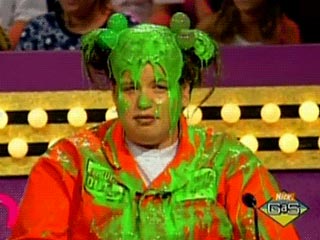
Photo Credit: Nickelodeon

In the late ’90s, Nickelodeon hatched what is one of the most brilliant cross-promotional schemes in modern history: Figure It Out. The game show starred panelists guessing the special talent of one particular kid, but in a twist, all the panelists were Nickelodeon personalities. The whole thing was entertaining on its own, but was also a half-hour advertisement for all the network’s other properties. In many ways, it was one of the first innovators of product placement.

Less cynically and post-childhood, I’d have said that Figure It Out was awesome. Hosted by former sports commentator and Olympic gold medalist (?!) Summer Sanders, the premise was simple and fun. There were lots of opportunities for slime, and almost every episode featured either future DUI magnet Amanda Bynes or the absolutely brilliant Lori Beth Denberg on the panel.

Denberg, if you recall, was the face of the “Vital Information” sketch on All That, and in that role, she defined much of my early childhood. The deadpan delivery, quick one-liners, absurdist premise: all of it was hilarious to me. I was the kind of kid that didn’t laugh too much at gross-out humor (I was a bit of a priss back then), but that was the exact kind of comic style I could appreciate.

On Figure It Out, Denberg was no less hilarious, and she was always a highlight, even when her panel was weighed down by losers like Danny Tamberelli. (Tamberelli was also Denberg’s absolutely miscast replacement on “Vital Information” – whoever thought that was a masterstroke of genius deserves the firing they inevitably received.) She had repartee with the other panelists and with Sanders, and she managed to make every joke land.

The Figure It Out era marked the end of Nick’s ability to really innovate with its programming. Nowadays, everything’s simply a spinoff of everything else, mirroring the Disney Channel formula. However, they’ve brought Figure It Out back, and while it’s not as amusing without the old panelists, the format is exactly the same, right down to the noise they play when someone gets an answer right. In this age of ’90s nostalgia and remakes that’s still winding down, it’s nice to see a rehash that really pays tribute to the original series.

Now, if only we could get Denberg and Sanders back on there. Below, check out one of the best Lori Beth Denberg episodes of Figure It Out.