Incoming seniors to live in Hannon

Originally published in the Los Angeles Loyolan. For original, please refer to: Incoming seniors to live in Hannon – Los Angeles Loyolan.

While LMU’s housing selection procedure has left some juniors and seniors lingering on the waitlist in the past, this year’s process resulted in all applicants with non-guaranteed status finding on-campus housing for the 2012-13 academic year.

The waitlist-free process, which, according to Director of Resident Services Nan Miller, is a first for the University, came with one caveat: In order to give all the non-guaranteed applicants housing, several students had to be placed in Hannon Apartments, a community that this year housed only sophomores.

“The Class of 2014, the ones who were guaranteed last year, was a big class in general. The amount of students who applied last year took up all of Hannon Apartments,” said Miller. “This year, there’s a smaller class, the Class of 2015, so there are less students in that guaranteed population.”

Seniors who are set to live in Hannon next year have mixed feelings about the situation.

“I’m not too happy about it, just because I feel like Student Housing should have told us living in sophomore housing was a possibility,” said junior liberal studies major Katherine DePonte.

“I feel like four-person junior groups would be better suited to Hannon Apartments, but for seniors, they really should be over in the Leavey area,” said junior business management major Connie Hoang.

While the presence of juniors and seniors in the Hannon Apartments may seem unusual, according to Miller it’s actually more common than some students think.

“Hannon, historically, has always been a split community in that sense,” Miller said. “Sophomores, juniors, seniors and even graduate students have lived there [previously].”

Regardless of the historical trend, the primary fear of rising seniors assigned to Hannon is that they’ll wind up living with underclassmen, an idea that is particularly unappealing to future Hannon resident and junior sociology major Melissa Mahoney.

“There’s a possibility that I’m gonna have to live with sophomores or juniors, which I’m not excited about at all,” Mahoney said. “I’ve lived with underclassmen before. It’s not fun.”

DePonte agreed, saying, “I would not be happy [living with sophomores], just because we’re in different places. We’re finishing; they’d still have two years left. I wouldn’t mind living with juniors, but I feel like sophomores are still kind of immature.”

The process of determining which buildings are available to non-guaranteed applicants is less about the upperclassmen pool and more about the number of rising sophomores.

“It’s really, in a lot of ways, focused on the guaranteed class: How many of them apply, how many of them come in. That starts to dictate how much of, let’s say, Hannon, we give to non-guaranteed students,” Miller said. “Depending on how many spaces there are in McCarthy, Rains and McKay [Residence Halls], we focus on Tenderich [Apartments] and if there are still some left, we put them in Hannon [Apartments].”

The process is confusing for several students, including Mahoney, who doubts the veracity of the selection process’s random lottery system.

“I’ve heard theories about this, that when you go to the page with the grid with the numbers, the grid is [fake],” Mahoney said. “Juniors and seniors go into the same lottery, while sophomores have their own thing. How could it be random if priority should be going to underclassmen?”

While some students may wonder about how random the process really is, Miller steadfastly defends the fairness of the program.

“[The lottery system] is absolutely, 100 percent random,” Miller said, acknowledging that many students doubt the legitimacy of the program. “It goes back to way back before any of us were here at the University when they would pull numbers out of a fishbowl. What we have online is the same philosophy, a grid put together by an expert in Information Technology Services. I don’t even know what the numbers are.”

Though some seniors may be frustrated with their housing arrangements in Hannon Apartments, Hoang and Mahoney agreed that they’d rather have the security of knowing they have housing rather than being left on a waitlist.

“If I wasn’t guaranteed housing, I’d rather just live in Hannon [Apartments],” said Mahoney. “A waitlist is too iffy. I’m not a risk taker.”

However, DePonte would rather have been waitlisted than be assigned to Hannon Apartments. “Hannon [Apartments] has always been just for sophomores,” she said, “and the environment is just very different than upperclassmen housing.”

With juniors and seniors returning in 2012-13 after a year of only sophomores in Hannon Apartments, it isn’t hard for Mahoney to imagine that Hannon itself will be significantly changed next year.

“I think that it’s going to be completely different. The fact that there’s seniors there who can go to the Loft for a bit and it won’t be a big event will change a lot of things. Hannon [Apartments] is typically for sophomores, so I think having that mix is gonna be different.”

Miller isn’t worried, however. “I don’t think it will be affected at all. The current year is the anomaly when it comes to Hannon [Apartments] predominantly being entirely sophomore students. … I know that our staff will do a great job at building the community and providing programs that meet the needs of everyone living there, just like they have in the past.”


Students must register for emergency alerts

Originally published in the Los Angeles Loyolan. For original, please refer to: Students must register for emergency alerts – Los Angeles Loyolan.

Registration for LMU’s Alert System (LMU Alert) will now be required for all students enrolled at the University in the Fall 2012 semester, according to a letter sent out Tuesday morning by Chief of Public Safety Hampton Cantrell.

The recently mandated system, which was first discussed late in the 2010-11 school year, will require students to sign up before registering for classes in the Fall 2012 semester. According to the message students received, the compulsory registration is designed “to promote safety and security.”

LMU Alert, according to Cantrell’s email, “is a system that allows the University to send important information and instructions during a campus or area-wide incident or emergency.” A system like LMU Alert for sending messages (through texts and emails) to students in case of emergency is required of all universities due to the Jeanne Clery Disclosure of Campus Security Policy and Campus Crime Statistics Act (Clery Act), which was passed in 1989.

Officials behind the change consider the greater reach of the system to be imperative. “We believe students being aware of an immediate crisis to campus is helpful to them in order to protect themselves and to keep them out of harm’s way,” said Cantrell in an interview with the Loyolan. “We have about 50 percent that are signed up now. … Right now, only half are getting the message, and that’s problematic.”

According to Senior Vice President of Administration Lynne Scarboro, the new obligatory system has been part of the plan for some time.

“We’ve been talking about it for a while,” Scarboro said. “I think that we’ve always intended it to be mandatory. It was just about thinking through how we wanted to do it.”

“This is a process that has involved people from across the University … to make sure that we are taking into account everybody’s interests in terms of the departments and the students,” said Director of Emergency Management Devra Schwartz.

“I think it’s a good idea,” said sophomore Spanish and sociology double major Bianca Villasenor of the change. “Their number-one concern should be our safety, and I feel this system makes it easier for us to keep in contact with them and can only help us know what’s happening on campus.”

Of the decision to link the LMU Alert sign-up to class registration, Scarboro said, “There are a number of things that fall into the category of being a student here and what we’re going to require of you. … It’s our responsibility to warn you. We have to require it.” Linking the LMU Alert sign-up to class registration keeps students from registering for their classes until they sign up.

“[The hold] is really our most effective way to make sure every single student registers for LMU Alert,” Schwartz said.

LMU Alert experienced some technical difficulties in March of last year when a message indicating that an armed gunman had appeared on campus, as reported in the March 22, 2011 Loyolan article “Alert system prompts concern” by then-News Editor Laura Riparbelli. With compulsory registration about to become a reality, Scarboro stressed that the system for sending emergency messages should be much more reliable now.

“Public Safety really doubled down on their training to make sure anyone that touches that system is trained. They’ve got to have two eyes on the message if it’s sent out,” Scarboro said. “We’ve got to be able to rely on it, and we’ve got to know how to use it.”

Any technical glitches, though they may be “annoying,” as described by Scarboro, shouldn’t hamper the ultimate goal of LMU Alert – that is, students’ safety.

“In an emergency, no one is likely to save you. The biggest help you can be is to yourself, but you have to have information to save yourself,” Scarboro said. “Your action in an emergency, your best chance of surviving, is what you do. That’s what the emergency system does: It puts a tool in your hands.”

– Additional Reporting by Laura Riparbelli

Hipsters’ popularity defies counter-cultural roots

Originally published in the Los Angeles Loyolan. For original, please refer to: Hipsters’ popularity defies counter-cultural roots – Los Angeles Loyolan.

Cartoon Credit: Ian Zell | The Los Angeles Loyolan

They wear skinny pants and TOMS shoes. They listen to underground music and embrace everything retro. They wear wayfarer glasses and consider independent artists the golden standard. These are the stereotypes surrounding hipsters in today’s popular culture.

The term “hipster” is firmly engrained in the mainstream vernacular of today. Hipsters have become so popular that advertisers are embracing the hip ideal as a marketable brand. The hipster, which was once considered an icon of the counter-cultural movement, is quickly becoming an immovable part of pop culture.

“Hipsters want to feel special and superior. That’s a huge thing, being superior,” said sophomore film production major Zoe Gieringer, who dislikes the ‘hipster’ label. “A lot of the culture is counter-mainstream. Hipsters almost have an aversion to the mainstream.”

“I think, for some people, it’s an attitude, a feeling of superiority,” sophomore film production major James Weber said of hipsters. “But I’d say that’s getting into the pretentious side of it … I would say a hipster would be someone who would wear trendy clothing, listens to independent music, is under the radar and has an eye for anything counter-culture.”

The hipster culture first came about in the 1940s as what author of the Journal of the American Musicological Society article, “The Problem with White Hipness: Race, Gender and Cultural Conceptions in Jazz Historical Discourse” Ingrid Monson describes as a “hip subculture, comprising black Americans interested in Western artistic nonconformity and white Americans captivated by urban African American styles of music, dress and speech.” The word “hipster” became popular again in the 1990s as a term for who particularly invested in independent music.

Sophomore film production major Caroline Dunaway was less clear about the definition of the word thanks to the connotations that have been attached to it.

“The problem is it depends on how you’re looking at the word,” Dunaway said. “I feel like, a lot of times today, when someone calls someone a hipster, it’s derogatory.”

Perhaps because of that negative connotation, it’s difficult to find many who will define themselves as hipsters. Junior film production major Dan Fromhart is a rare breed: someone who seems to have a grasp on hipster culture while submitting himself to the label.

“I would consider myself a hipster,” said Fromhart, “but by doing that, I don’t think I am actually considered a hipster. I can call myself a hipster just because people would consider me a hipster. The way I dress is hipster, but the way I live my life isn’t.”

Today, however, the movement seems to be centered on retro fashion as well as with independent music. The stereotype also indicates a competitive nature among hipsters to discover small artists and wear unconventional fashion trends first.

“People associate being a hipster with trying to go against the grain as well as trying to find the super cool, underground bands that no one knows about and stay ahead of everyone else in knowing about things,” Dunaway said. “So I think in that sense, that’s where the negative connotation comes from.”

As the hipster label has evolved, however, it has increasingly  become part of popular culture, something Dunaway said was a contradiction of the very ideals behind the culture.

“People truly believe in the counter-culture aspect of it, but the hipster image reigns supreme in popular culture when it comes to our generation and what it means to look cool,” Dunaway said. “Advertisers cater to the hipster demographic. When you go to a store and say, ‘I’m going to buy this, it’s so hipster and counter-culture,’ thousands of other kids are doing the exact same thing … [and] you’re actually feeding the popular hipster culture. It’s not good, it’s not bad; it’s just popular.”

The marketing of the hipster image is what has caused so many to attempt to be hipster simply as a trend or fad. It is those people who have added a negative connotation to the word: the divide between real hipsters and posers.

“There’s a conceived true hipster and a conceived wannabe hipster,” Dunaway said. “A lot of people see a real hipster persona and a buyable, wearable hipster persona. You can buy the records, you can put on the clothes, but does that make you a hipster? I don’t know.”

“People go out of their way to dress the part of a hipster and make it look like they’re part of the culture because it’s becoming more popular,” said senior business major Brian Pede. “It’s cooler to be that way and dress that way.”

At LMU, according to Gieringer and Fromhart, hipster culture is a bit more limited, with most of the emphasis placed on the music scene versus the counter-cultural aspects.

“I don’t think there’s a strong hipster culture at LMU, but because there isn’t one, the people who have even the littlest tinge of hipster to them are immediately put into that box,” Gieringer said.

Fromhart added that LMU’s hipster culture was “suppressed, but growing,” largely thanks to the school’s population of wealthy students seeking a way to rebel against their upbringing.

“In regards to music, I think [the LMU hipster scene] actually has a lot to offer that you might not realize when you first come here,” Dunaway said. “As far as the bad hipster connotation goes, I don’t want to say sometimes people try too hard, but people can try too hard.”

As the hipster image continues to evolve, it will likely fall out of the popular culture once again. However, the culture of hip will continue on and possibly return to its counter-cultural roots.

“I think it’ll absolutely continue to evolve, but I’m interested to see where it goes,” Dunaway said. “Everything is influenced by something else. We can’t keep pulling out of thin air. It seems like we’ve gone through so many cycles – I’m interested to see what it’ll be. I’m certain it’ll be something from the past, just repurposed into something just a little different. Only time will tell.”

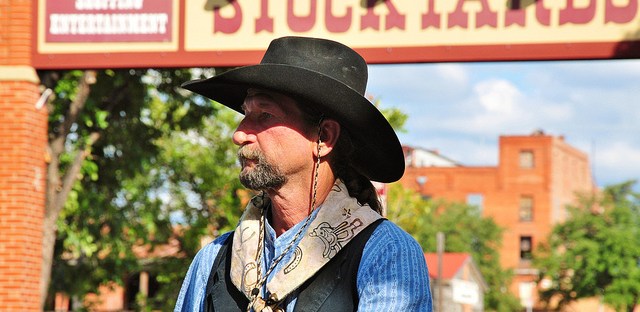
Texan cowboy

The death of the Southern drawl, y’all

Originally published in the Los Angeles Loyolan. For original, please refer to: The death of the Southern drawl, y’all – Los Angeles Loyolan.

Texan cowboy

Photo Credit: Flickr Creative Commons

I have never felt like more of a disappointment than when a blind date told me he expected I would have an accent. Apparently, being from Texas, I was expected to be a good ol’ Southern boy rather than my true self: An urban, pop culture fanatic who thinks “roughing it” means staying at a Hampton Inn.

Truth is, I’ve never had a Texan accent, nor do I know anyone in my generation who does. But I always assumed that was because I’m from Austin, a more cosmopolitan area than the stereotype might lead you to believe. According to a study by the University of Texas at Austin, the Texas English Project, that began in 2008, Austinites are not the only ones losing their accents.

In the Jan. 28 Austin American-Statesman article by Brenda Bell, titled “Is the Texas twang history?” that reported on the study, the typical Texan accent is becoming extinct as it “is being infiltrated by what linguists call General American English, a more-or-less Midwestern accent, the standard heard on TV and other spoken media.” Accents across the country, from the San Fernando Valley here in California all the way to the Jersey Shore, are being affected by the same trend, which leads those in the younger generations away from traditional speech patterns and toward the homogenized tone that has become so popular in media.

The article states, as expected, metropolitan areas are succumbing more significantly to General American English than rural areas. It also states that in the urban areas, young women are the ones picking up on the speech trends the fastest, causing their use to become more common.

Fascinatingly, the study also shows that, while the Texas drawl is dying out, several phrases and words are staying alive. The article cites one particular subject, Luke Malone, as often saying “thank you kindly” at work despite his bland Midwestern accent. Malone was born and raised in Austin, so using these kinds of phrases is probably a purposeful decision on his part to counteract the Midwestern accent that has replaced the Texas drawl.

One such word choice that isn’t purposeful is “y’all,” possibly the most common differentiation remaining between Southerners and others. The more time spent around those who don’t say “y’all,” however, the quicker the word’s use dies out, just like other regionally-specific phrases and patterns of speech. I know I personally still use the word, but soon enough my life in California will probably make my “y’all” a thing of the past.

It’s a shame that regional American accents are going the way of the dinosaurs, because they really are a way to maintain one’s culture despite geographic distance. Hearing everyone speaking with the same accents all the time is boring and just another way everyone in America can be homogenized. Accents are an unmistakable link to one’s roots, something that can’t just be changed or reappropriated like a flannel shirt or a cowboy hat. If people in our country all spoke the same, dressed the same and looked the same, there wouldn’t be much differentiation, would there?

What if the General American English accent spreads beyond just America? As the world itself becomes more intermingled and intermixed, it’s only natural that globalization would come to include accents as well. The Biblical story of the Tower of Babel says that humanity’s ambition to reach heaven led to everyone being scattered and made to speak different tongues. Are we, as a world population, destined to reach that point where we not only speak the same language but also speak it in the same way?

It’s a long-term concern, and I’m certainly not worried about everyone coming together to build a tower to the heavens, but it might be the eventual cause of the spread of a homogenized accent. All of this, of course, is a massive exaggeration. Ultimately, this problem probably won’t go farther than making everyone in our country sound similar, which is awfully boring. We should be a diverse country – after all, we are all from different states with separate identities.

I don’t particularly like a Texan accent. It’s too slow, and I’m not one who can wait for someone who talks at a snail’s pace. However, I do appreciate the accent for being different, just like all other regional accents in this country. The spread of General American English may be inevitable thanks to shared media like TV and film, but I hope that remnants of accents stay around, if only to make Americans slightly more interesting.

ASLMU town hall connects candidates to community

Originally published in the Los Angeles Loyolan. For original, please refer to: ASLMU town hall connects candidates to community – Los Angeles Loyolan.

ASLMU

Photo Credit: ASLMU

Amidst the senatorial and presentational debates that took place last week, ASLMU hosted a smaller town hall meeting with all 23 students running for office this election cycle Wednesday night in St. Robert’s Auditorium.

The town hall featured all three presidential-vice presidential tickets and the 17 senatorial candidates answering a mixture of prepared questions and questions from the audience. The recent announcement of higher parking fees was a major topic of conversation, as were the needs for more transparency and the senatorial candidates’ lack of experience and knowledge about their job requirements.

Current Speaker of the senate and senior communication studies major Mary O’Laughlin was the first to reference the latter topic, noting that several of the candidates’ plans for changes if elected were already part of the ASLMU senate’s activities. Several candidates didn’t answer the question, while others, like sophomore accounting major Michael Curran, owned up to their lack of knowledge while pledging to do their research. After a few of the candidates’ responses, junior marketing major and presidential candidate Bryan Ruiz stepped in to defend them.

Curran was also one of three senatorial candidates asked if senators should be paid for their work, something several of the senatorial candidates weren’t even aware was part of their job description. While Curran argued they should be paid, fellow senatorial candidate and sophomore entrepreneurship major Colin O’Brien gave a more conditional answer.

“I think before we get paid, we should clear up the transparency issue,” O’Brien said, echoing several other candidates who brought up the need for more direct communication between ASLMU and the LMU student body. “Once we’ve done something that merits getting paid, we can.”

The event, which was attended by approximately 30 students, half of them somehow affiliated with ASLMU, was intended to give the candidates a way to talk more directly with the community. While candidates and current ASLMU officers alike lamented the limited attendance, the event marched on with audience members asking the candidates varied and sometimes pointed questions.

“I wish there had been more people in the audience,” current ASLMU president and senior English major Art Flores said after the event. “This was a good first showing for the candidates [though].”

“I think students are busy, but I think they are interested in ASLMU,” presidential candidate and junior political science and Spanish double major Emilio Garcia said. Garcia’s running mate, junior accounting major Laura Kramer, intended to participate via Skype from Spain, but technical issues led to Garcia representing both halves of their ticket.

Ruiz and running mate junior sociology major Vince Caserio make up one of the other presidential tickets; the third includes presidential hopeful Jennifer Mercado and vice-presidential candidate Erick Bozeman, both junior political science majors. Mercado spoke about the transparency issue after the debate had ended while simultaneously defending the senatorial candidates.

“A lot of people don’t know what ASLMU really does, and that’s a problem,” Mercado said. “[The senatorial candidates] are qualified … [though] it is unfortunate that they don’t quite know what the senate does. I’m sure they’ll go home tonight and study up.”

While most of the attendees were already members of ASLMU, as noted by incumbent senatorial candidate and freshman biology major Roy Dilekoglu, there were some attendees who had no relation to the organization or any of the candidates, including sophomore political science major Ted Guerrero.

“I didn’t go to the event last year, so I wanted to show up and support, as well as be informed,” Guerrero said of his decision to attend. “I thought it went well. I thought they conveyed their passions well.”

For the senatorial candidates, the town hall was their final public event before voting next Tuesday through Thursday. The presidential candidates also appeared during Thursday’s presidential debate in Lawton Plaza.