CollegeFest acts revealed

Photo Credit: Liana Bandziulis

Photo Credit: Liana Bandziulis

Originally published in the Los Angeles Loyolan. For original, please refer to: CollegeFest acts revealed – Los Angeles Loyolan.

Hip hop duo Chiddy Bang will headline this year’s CollegeFest, according to a statement released on ASLMU’s Facebook page last night and confirmed by ASLMU Director of Performance Events Ashley Thompson, a senior finance major.

CollegeFest, the annual spring concert event which will be held on Sunday, March 24 at 4 p.m., will also feature two opening acts – the previously announced Joanie Payne, and indie pop band Youngblood Hawke.

ASLMU Office Manager Jason Joyce said in an interview with the Loyolan that the acts were chosen as a way for CollegeFest to appeal to a wider range of listeners. Thompson echoed this sentiment when she told the Loyolan the acts were chosen “to reach a broad segment … [and] the largest portion of LMU.”

According to Thompson, Chiddy Bang was a “student-driven” choice – though another hip hop act resoundingly supported by students, Macklemore, wasn’t available. Thompson said that ASLMU actively attempted to book Macklemore, but was unable to do so due to budget and scheduling restraints.

Chiddy Bang, a duo known for its songs “The Opposite of Adults” and “Mind Your Manners,” is the first full-fledged hip hop act to play CollegeFest in several years. Previous years featured bands like Gym Class Heroes and The Bravery, as well as house music act Steve Aoki.

When asked about potential controversy with a hip hop act, Thompson said that their contract includes a clean show clause. Thompson described Chiddy Bang’s material as “pretty clean.” The duo has also performed at other colleges, including the University of South Florida and Virginia Tech University. YouTube videos of performances at those shows, however, include profane language, indicating that LMU’s clean show clause may not be standard of college shows.

Beyond the music, Thompson said CollegeFest has been envisioned as more of a “festival” this year than in the past, with food trucks, giveaways and a beer garden planned.

Bigelow and Boal’s Twin Protagonists

Watching Zero Dark Thirty for the first time, I was fully invested in the story of the hunt for Osama Bin Laden. As a docudrama about one of the most formative events in our nation’s history, I was riveted. It was gripping.

And then, in the movie’s final moments, I realized it isn’t about that at all. It’s about one woman, Maya (Jessica Chastain), a character dancing between the lines of real and imagined. It’s about her drive to achieve her goal, her total devotion to her craft and her aimlessness upon realizing that she had finally achieved what she had spent her whole life doing. As she says to her boss over lunch when asked what else she’d worked on besides Bin Laden in her career at the CIA:

“I’ve done nothing else.”

Spoilers from here on out on both Zero Dark Thirty and “The Hurt Locker.”

The line almost feels comic when first delivered – Maya is portrayed as hellbent on her goal, and though effective, her methods sometimes trend toward the ridiculous. Of course she’s done nothing else! Then, in the final scene of the film, we see Maya shed tears when asked the one question – perhaps in her entire life – that she’s been unable to answer:

“Where do you want to go?”

Maya is a woman recruited right out of high school and trained her entire life for one goal: the hunt and capture of Osama Bin Laden. She has, quite literally, nothing else: no friends, no notable family, no goal. She’s a dog who has finally caught her tail: what now?

Chastain plays the final scene beautifully, almost gasping for breath through the tears, in utter disbelief that she’s reached this point in her life. It’s reminiscent of another scene in another Kathryn Bigelow/Mark Boal collaboration, The Hurt Locker.

Much like Maya in ZDT, the protagonist of The Hurt Locker is single-minded in his ambition and goals. Sgt. William James (Jeremy Renner) is an adrenaline addict who is the best at what he does: deactivating live bombs. The most intense situations don’t faze him. But a simple trip to the grocery store after returning home to his wife and child perplexes him. He can’t handle being bored, and ordinary life bores him. So he reenlists so he can continue his live-wire work.

Maya and James are both fascinating characters not despite what we don’t know about them, but because of it. We don’t learn about James’ family until the very end of the film, but we’re never given more information about him than is necessary. Maya is a total blank slate, to the point where she appears to be nothing but a cipher for the film’s plot. Then, of course, you realize exactly how pertinent she’s been the whole time.

Bigelow and Boal are an interesting partnership, because they work on a similar wavelength. Both like logical, journalistic story settings, but both appreciate having a flesh-and-blood, relatable character at the center. Both embrace the best parts of docudrama while avoiding creating unemotional works. And both appreciate a tough-to-love character that is nonetheless utterly fascinating. It’s no wonder their collaborations have been so successful – and why Maya and James are so similar.

The two protagonists have much in common, and even their differences are telling – especially Maya’s lack of roots versus James’ family at home. At the end of the day, James would envy Maya; a rootless existence filled with nothing but dismantling bombs is his paradise. Similarly, Maya would prefer a world where she could chase Osama Bin Laden forever. Ultimately, however, James can reenlist, but Osama is dead, and Maya is left without any hope, completely unprepared for the world she hasn’t truly been in since high school.

Maya and James feel like spiritual twins, partners who might realize that they aren’t alone when recognizing their own traits in the other. Most importantly, they are the passionately beating hearts at the center of their films. Without those hearts, despite Bigelow and Boal’s best efforts, I think the films would have been so much less than they are. It’s easy to hope that Maya and James might be revisited in a future work, but I think I prefer my understanding of them still incomplete. It’s not what we know that’s most fascinating, after all – it’s what comes after.

David Koechner

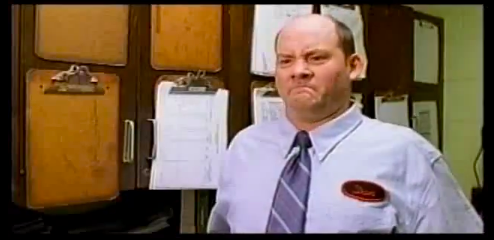
‘Anchorman’ star David Koechner named Comedy for a Cause headliner

Originally published in the Los Angeles Loyolan. For original, please refer to: ‘Anchorman’ star David Koechner named Comedy for a Cause headliner.

David Koechner

Photo Credit: YouTube | roryphotography

ASLMU’s Comedy for a Cause, previously known as both Comedy for a Cure and Comedian for a Cure, has found its headliner: “Anchorman” star David Koechner.

“He’s in ‘The Office,’ he’s in ‘Anchorman’ … so he’s been in the public view a lot,” said ASLMU’s Director of Performance Events and senior finance major Ashley Thompson of the choice. “We looked at his stand-up comedy style, and he’s what we wanted. He’s available and lives in L.A. – kind of a match made in heaven.”

The actor/comedian, who has also played recurring character Todd Packer on “The Office” since 2005 and was a “Saturday Night Live” cast member in the show’s 21st season, was selected in mid-September.

ASLMU President and senior marketing major Bryan Ruiz said that he thinks Koechner’s reprisal of his role as sportscaster Champ Kind in the tentatively-titled “Anchorman: The Legend Continues” next year will drive students to the event.

“Especially with Anchorman 2 coming out … I feel that students are going to respond really well,” Ruiz said. “We [at ASLMU] were all ecstatic.”

Opening for Koechner at the event will be this year’s Last Student Standing winner, junior screenwriting major Justin Small.

Under the event’s new title, Koechner was asked to choose which charity the event’s funds would support.

“In the past, the event has benefited the Susan G. Komen Foundation,” Thompson said. “This year, we decided to open up the philanthropy to the comedian. So we asked David … [and] he chose the Balanced Mind Foundation.”

The Balanced Mind Foundation, a Chicago-based foundation first established in 1999, is an organization with the goal to guide “families raising children with mood disorders to the answers, support and stability they seek,” according to their website.

To raise money for the Balanced Mind Foundation, junior psychology major Caitlin Maher, ASLMU’s chair of programming, said that the event’s coordinators have been focusing on fundraising opportunities.

“One of our major goals that we’ve been focusing on is just getting a lot of donations from different businesses, so we can donate a significant amount of money to the foundation,” Maher said. “Because that’s what the whole entire event is centered around.”

Fundraising opportunities include a raffle that will include prizes like gift cards to Best Buy and C&O Cucina, as well as tickets to Six Flags Magic Mountain. According to Maher, ASLMU is also hosting a Pinkberry fundraiser on Sunday, Oct. 20.

Comedy for a Cause will be held Tuesday, Oct. 23, at 7 p.m. in Gersten Pavilion. The event will be free, but raffle tickets to be entered for a prize will cost $5 for one and a discount $10 for three, and will go on sale starting tomorrow during Convo.

11 Burning Questions with an L.A. Times editor

Originally published in the Los Angeles Loyolan. For original, please refer to: 11 Burning Questions with an L.A. Times editor – Los Angeles Loyolan.

Photo Credit: John Corrigan

1) How did you first get involved at the L.A. Times?

I’ve been involved with the L.A. Times since 1999. I was hired as the night city editor and the business editor for the San Fernando Valley. I was a screenwriting major here at LMU, and when I graduated I couldn’t figure out how to become a screenwriter. So I ended up getting into a Master’s program at [CSU] Northridge in communications. From there, I managed to get an [unpaid] internship at the L.A. Times and some clips.

2) How did you transition from your old position as business editor to your current post?

The former [assistant managing editor] had left the organization. The editor, Davan Maharaj, approached me to take it over. I had been associated with some quality journalism projects – I edited our Wal-Mart series that won the Pulitzer in 2004. … [Maharaj] was aware of my arts background and thought it would be a good fit.

3) As assistant managing editor for arts & entertainment, what is your goal for the section?

My goal is to have the best arts & entertainment section in the country. We live in the entertainment capital of the world, and we have special access to filmmakers, to actors, to producers. What I want to have is both print and online content people really want to read that is useful, compelling [and] thought-provoking.

4) What do you think arts & entertainment can do that is special?

Especially in this era of the Internet and instant news, if you look at the hard news headlines, a lot of the time the stories on the front page or in the news sections people have some familiarity with. … Arts & entertainment has the unique position where most of the stories on our cover, people may not have a familiarity with.

5) How do you feel your work in business sections informs your current work?

In business in particular, you get a discipline of looking beyond what people say to [the] numbers and information. … When you are covering the showbusiness elements of the entertainment industry, it does force a certain mindset to try to find facts to go with the words — to look a little deeper and harder for information.

6) Do you feel your screenwriting major background makes you more drawn to film in arts & entertainment?

Screenwriting was really helpful [to me] in being a journalist. … When you’re writing about features or events, you have to think [about] storyline, the plot and characterization. When you’re writing about people, you want those people to come to life.

7) Did you write for the Loyolan back in your LMU days?

I did indeed. I remember covering Bobby Seale, the Black Panther who came to campus … that was on Page 1 of the Loyolan. And I believe my first assignment [was about how] at the time, people would park on campus and their windshields were leafleted with ads from a term paper research company.

8) We featured a debate (“How real is too real?” in the Sept. 20. Loyolan) about the photo of the Libyan ambassador that ran on the front page of the L.A. Times. Can you speak at all to the decision making behind that?

I really can’t. I was not directly involved in that decision.

9) You sit on the LMU Magazine advisory board. What do you do in that role?

We meet about four times a year to review the magazine and make suggestions. … One of the big audiences is alumni, and so I thought pictures of what’s going on on-campus now, that’s important – more stories to just bring you back to campus.

10) What do you hope to bring in your speech to the Loyolan staff? [Editor’s note: Corrigan spoke at the Loyolan’s staff meeting last Monday.]

To me, journalism is really a wonderful pursuit. … Years ago, reporting was very strict: not opinion … only a few people could be commentators or have opinions. Increasingly, though, with so much news out there … there is a chance for analytical writing, for opinion writing. … There’s something about writing that is strong.

11) If you boiled your life down to a headline, what do you think it would be?

“Making the most out of life.”

Don’t hate the “8”

Originally published in the Los Angeles Loyolan. For original, please refer to: Should “8” play?: Don’t hate the “8” – Los Angeles Loyolan.

Graphic Credit: Alberto Gonzalez | The Los Angeles Loyolan

It shouldn’t even be a debate.

I’ll admit – I’m curious as to what fellow contributor Lauren Rockwell’s argument is regarding the LGBT Student Services (LGBTSS) Office’s presentation of “8,” the pro-marriage equality play, at LMU tomorrow night. From my point of view, not as an LGBT individual, nor as someone who is pro-marriage equality, but simply as an LMU student, I fail to see a single valid reason why the play shouldn’t be read on our campus.

Agree or disagree with what the play is arguing, the fact is that the show must go on, not because of the subject matter, but because it is an expression of a faction of students’ opinions. Their voices deserve to be heard.

For those who aren’t familiar with the play, “8” is a dramatic interpretation of the Perry v. Schwarzenegger trial currently headed for the Supreme Court. The case is about the constitutionality of Proposition 8, the infamous amendment to the California constitution that banned same-sex marriage in the state. Written by Dustin Lance Black, the Academy Award-winning screenwriter of “Milk,” “8” is an unabashedly biased and activist look at the trial, but it never pretends to be anything else.

Controversy brewed about the presentation of “8” on LMU’s campus when The Cardinal Newman Society posted an article about this on its blog. The post, which has been picked up by a couple other Catholic blogs but has failed to make a dent in the greater media sphere, argues that LMU is promoting gay “marriage” (complete with incredibly condescending quotation marks) through its production of “8.”

What The Cardinal Newman Society fails to understand is that if LMU were to shut down the production of “8,” the University would be silencing student voices simply because they are at odds with the Catholic Church’s positions – a terrifying proposition, and completely at odds with the Jesuit mission to educate the whole person and encourage learning, as LMU’s mission statement reads.

When asked about “8” in an interview with the Loyolan, ASLMU President Bryan Ruiz said that he believes LMU students’ self-expression “does need to be heard.” LMU and President David Burcham are clearly working with the same mindset, and their refusal to cancel the show is inspiring.

I’m incredibly proud to go to a religiously-affiliated school that is comfortable presenting a pro-marriage equality play on its campus while not fully endorsing it. To endorse the show would indeed be a violation of the Catholic position, something we shouldn’t ask the University to do. But to shut it down would violate our mission. So in truth, President Burcham and his administration have done the only thing they can do without appearing hypocritical to some part of the University’s identity.

You’ll notice I haven’t talked much about why I think “8” is so great and how important the message it will spread to students is. That’s because “8” isn’t great, and I think said important message is something the majority of our student body already supports.

On paper, “8” is a clumsily written play, full of preachy monologues and an unwillingness to portray marriage equality opponents as anything but morons. The marriage equality debate deserves a better dramatic interpretation, and I have no doubt that several years down the road, we’ll see one. But a show being bad isn’t any reason to censor it from running. As the Loyolan’s primary theatre critic for the past two years, I’ve certainly seen shows I didn’t like, but you never once heard me call for their cancellation out of sheer disgust. Besides, the point of “8” isn’t to be great theatre – it’s activist in nature.

The message it is spreading, however, is something I think most students on this campus and across the country already feel: Marriage equality is the right thing for right now. Even among young conservatives in the U.S., support for same-sex marriage is rapidly rising. A Washington Post-ABC News poll from May shows that almost half of young conservatives do indeed support marriage equality – and among young liberals, that number is sky-high. So, I don’t necessarily think a college campus, even a Jesuit one like LMU’s, is the most effective stage for a play like “8.”

What does any of this matter? Simple: It doesn’t. No matter how bad the play is, how repetitive its message may be or how much it may get The Cardinal Newman Society’s panties into a bunch, there is simply no valid reason to cancel “8.” At the end of the day, this is about students’ free expression, and we go to a school that values said expression.

That’s something worth celebrating, not debating.