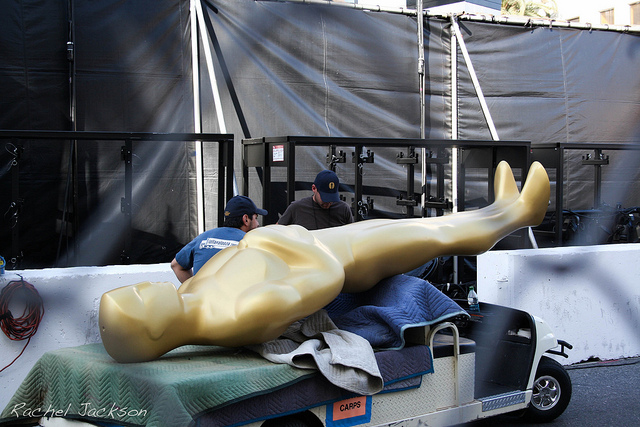
Oscar

Diversity of Direction

Originally posted as part of Road to the Gold, an Oscar blog on LALoyolan.com. For original, please refer to: Diversity of Direction – Los Angeles Loyolan : Road To The Gold.

Oscar

Photo Credit: Flickr Creative Commons

Forget the golden days of merely two years ago: there is no diversity allowed in the Best Director Oscar race.

Save a few extraordinary directors such as Ang Lee (“Brokeback Mountain”) and Jane Campion (“The Piano”), recognition of anyone who doesn’t fit into the slim “older-white-male” demographic seemed nigh impossible for the Best Director voting body in the Academy.

When “The Hurt Locker” director Kathryn Bigelow won the statuette in 2010, her victory was seen as a sign of changing tides in the white men’s club that the Best Director race has always been. After all, in the same year, Lee Daniels (“Precious”) was only the second African-American man ever to be nominated for the same award (after John Singleton). Unfortunately, in the years since, the Academy has reverted to what is familiar once again.

Last year, the overflow of white, male directors was acceptable simply because they were almost all young and ambitious. The winner, Tom Hooper, directed “The King’s Speech,” and while his film appealed primarily to older audiences, he is a young man. David Fincher, director of “The Social Network,” and Darren Aronofsky, director of “Black Swan,” are both incredibly ambitious and respected in film criticism circles. Even the veterans of the category, David O’Russell (“The Fighter”) and Joel and Ethan Coen (“True Grit”), are a much different brand than the usual directing nominees.

This year is not an exception to the rule. Certainly, Woody Allen (“Midnight in Paris”), Alexander Payne (“The Descendants”) and Martin Scorsese (“Hugo”) are masters of their craft, and Michel Hazanavicius (“The Artist”) and Terrence Malick (“The Tree of Life”) are certainly ambitious, but they are very much the stereotype of a Best Director nominee. The youngest of the five is Hazanavicius at 44 – not coincidentally, he is the only first-time nominee. All the others have been here before; Scorsese and Allen have both won previously as well.

Why not nominate the young Danish director Nicolas Winding Refn for “Drive”? Or how about the female African-American director of the ambitious “Pariah,” Dee Rees? There’s nothing wrong with stacking a category with lots of experience – in fact, the Best Director race should theoretically reward experience more than any other. It is a little disappointing, however, that ambition and diversity can’t be rewarded in equal measure. As far as the winner, look no further than Hazanavicius. The youngest will be rewarded thanks to his film’s almost certain dominance of the show next Sunday.
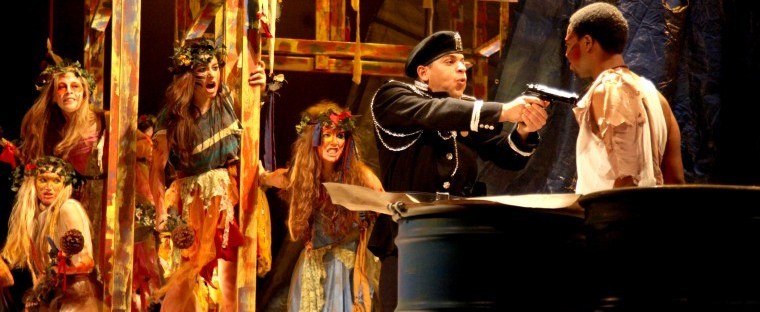
The Bacchae of Euripides

Strong performances carry difficult ‘Bacchae’ material

Originally published in the Los Angeles Loyolan. For orignal, please refer to: Strong performances carry difficult ‘Bacchae’ material – Los Angeles Loyolan.

The Bacchae of Euripides

Photo Credit: Devin Sixt | The Los Angeles Loyolan

It can be said that “The Bacchae of Euripides,” the newest production by LMU’s theatre arts and dance department, is a strange show. It is an intense show. It is a challenging show. But most importantly, it is a masterful show.

Based on “The Bacchae,” a Greek tragedy written by Euripides, and first performed in 405 BC this version, written by the President’s Marymount Institute Professor in Residence Wole Soyinka, is an African interpretation with powerful musical moments. It requires incredible levels of commitment from each member of the ensemble cast and sky-high energy levels, and under the direction of theatre arts professor Kevin Wetmore, “The Bacchae of Euripides” is a success because it achieves both.

The story is based on the myth of King Pentheus, a man who refuses to follow Dionysus, the god of wine (amongst other things). Pentheus and his mother, Agave, are both punished, as she is possessed by the same bloodlust and passion as Dionysus’ other female followers. Behind the basic plot are greater themes, including the battle between creation and oppression. This production communicates these themes through commanding dance and music.

Wetmore chose to create a sense of controlled chaos in the production, with modern and classical sensibilities merging in powerful fashion. The set, designed by theatre arts professor Maureen Weiss, is absolutely incredible, almost a jungle gym on a sparse stage that is used as setting, prop and musical instrument. Every inch of the stage is used, with actors venturing into the audience for even further exploration of the space. The costumes, which were created by visiting theatre arts professor Sara Ryung Clement, are an interesting mix of African and post-apocalyptic design, a fascinating choice and one that works really well.

While the play is incredibly visually appealing, it could only reach truly masterful status with the help of a strong, committed ensemble of actors. The dialogue is challenging and the choreography demanding, so both require nothing less than top-notch work from all involved. Luckily, there are only a few weak links here – almost every performer does stunning work. Sophomore theatre arts major Julian Garcia is especially stunning as King Pentheus. From his first line, he commands attention and owns the stage with volume and authority. His range is awe-inspiring and his sheer skill is impressive.

Many other members of the ensemble join Garcia in energetic and expressive work. Two that stand out are senior theatre arts major Jeremy Larrere as Tiresias, the blind priest, and freshman theatre arts major Keeley Miller as Agave. Larrere fully inhabits his character, playing not only the dramatic moments but also making the awkward attempts at humor bearable. Miller’s Agave is all about the drama and is something of a one-scene wonder, only appearing during the play’s final moments. But the revelation of her character’s actions is ambitious and impressive.

Several members of the ensemble are given powerful monologues that rarely slow the pace of the show – instead they act as showcases for each performer, even those in otherwise minor roles. Freshman theatre arts and communication studies double major Gabriel Gonzalvez truly wrings every dramatic drop out of his monologue, breaking out of the simple Officer role and making an impact. Junior theatre arts major Nelia Miller gets multiple monologues as the leader of the slaves and knocks each and every one out of the park.

“The Bacchae of Euripides” is not without its faults, however. As mentioned previously, there are several incredibly lowbrow stabs at humor that fall short, especially considering the powerful scenes surrounding them. Why the otherwise devastatingly potent production chose to dilute the drama with painfully unfunny penis jokes and men in drag is beyond me. Additionally, there are several scenes of both the comic and tragic variety that seemed to last forever, affecting the pacing of the show negatively. This production is at its best when it is fast-moving and there’s plenty going on – watching one actor lecture another for 10 minutes is nothing but a hindrance.

Those scenes and choices, though unfortunate, cannot derail what is ultimately a brilliant production. “The Bacchae of Euripides” is more than just a play. It is art in motion with commanding performances by committed actors. It is not to be missed.

“The Bacchae of Euripedes” is now in the middle of its run at Strub Theatre. It has three shows remaining, starting with tonight’s performance, at 8 p.m. Tickets are $10.

Melissa McCarthy

Always a Bridesmaid, never a Best Supporting Actress

Originally posted as part of Road to the Gold, an Oscar blog on LALoyolan.com. For original, please refer to: Always a ‘Bridesmaid,’ never a Best Supporting Actress – Los Angeles Loyolan: Road To The Gold.

Melissa McCarthy

Photo Credit: YouTube | UniversalPictures

The Best Supporting Actress race, which is often filled with some of the best performances in the Oscar race (Mo’Nique in “Precious,” anyone?), is more than a little disappointing this year. The actresses are doing fine work, but that’s all it is: fine. There’s very little revolutionary work being done by these women, which is a shame because many of the actresses have done revolutionary work in the past.

“The Help” actresses Octavia Spencer and Jessica Chastain are both solid, if unspectacular; Chastain in particular did better work in several other films this year, particularly “The Tree of Life” and “Take Shelter.” Bérénice Bejo is delightful in “The Artist,” but she’s also a lead actress committing category fraud. Janet McTeer is the best part of a bad movie in “Albert Nobbs.” In my mind, only Melissa McCarthy is deserving of her slot in the big race (so, of course, she’s not going to win – always a “Bridesmaid,” never a bride, after all).

If the category were to really feature the best performances of the year, Academy voters would reward ambitious work by Vanessa Redgrave in “Coriolanus.” They would reward the emotionally vibrant performance by Shailene Woodley in “The Descendants.” They would reward one of the most beautifully nuanced female performances of the year: Rose Byrne in “Bridesmaids.” Most of all, they would reward the ballsy, breathtaking work by Carey Mulligan in “Shame.”

This year’s Best Supporting Actress race is far too much like the usual Best Supporting Actor race – it rewards the comfortable over the ambitious. Unfortunately, it also ignores four incredible performances that deserved more recognition.

If I were an Oscar voter, McCarthy, Redgrave, Woodley and Byrne would all have tickets to the big show, and Mulligan would take home the honors for her powerful and unexpected work. But for now, it looks like we’ll have to settle for a Spencer win. What a disappointment.

Oscar

The lamest Best Supporting Actor category ever

Originally posted as part of Road to the Gold, an Oscar blog on LALoyolan.com. For original, please refer to: The lamest Best Supporting Actor category ever – Los Angeles Loyolan: Road To The Gold.

Oscar

Photo Credit: Flickr Creative Commons

Somehow, this year’s Best Supporting Actor race has managed to be the dullest one in history. This is a category that has featured four straight years of winners who dominated every single precursor with little to no resistance: Javier Bardem for “No Country for Old Men,” Heath Ledger for “The Dark Knight,” Christoph Waltz for “Inglourious Basterds” and Christian Bale for “The Fighter.” And yet this year beats all the rest.

It was supposed to be different – this was a year that saw multiple stellar performances recognized early by multiple critics. Oscar front-runner Christopher Plummer received acclaim for his performance as a gay, cancer-stricken father in “Beginners,” while industry veteran Albert Brooks was lauded for his work as a gangster in “Drive.” Additionally, different voting bodies recognized Patton Oswalt for “Young Adult” and Armie Hammer in “J. Edgar.” It looked like a year when both veterans and younger performers alike would be rewarded.

When the nominations were announced, only Jonah Hill for “Moneyball” remained among the youngsters. Joining him were Plummer, “My Week with Marilyn” star Kenneth Branagh, Max Von Sydow from “Extremely Loud and Incredibly Close” and Nick Nolte from “Warrior.” Plummer, Von Sydow and Nolte are all over 70 years old. Branagh is 50. The average age of all nominees is 62.

Certainly the nominees don’t have to be young to be interesting, but it does make the category less diverse. All of the nominees are white as well. Of course, diversity isn’t required – but then again, it’s always appreciated, especially when the performances aren’t great. And the performances this year simply aren’t great.

To wit: While Brooks was playing against type and wonderfully menacing in “Drive,” Nolte is merely rekindling an old spark of talent in “Warrior.” It’s the difference between an ambitious performance and a reliable one, and that’s the constant struggle with Best Supporting Actor in particular. It tends to reward the comfortable over the tenacious.

Best Supporting Actor isn’t likely to change in structure for some time – it is, like all others, a category that rewards what’s available. Hopefully, more films will soon give supporting actors a chance to do the same powerful work as the front-runners each year. That way, the race can become more than just a footnote at the big show.

Oscar

Mary J. Blige is NOT happy: The Best Original Song blunder

Originally posted as part of Road to the Gold, an Oscar blog on LALoyolan.com. For original, please refer to: Mary J. Blige is NOT happy: The Best Original Song blunder – Los Angeles Loyolan: Road To The Gold.

Oscar

Photo Credit: Flickr Creative Commons

There is no category at the Academy Awards more simultaneously wonderful and embarrassing than Best Original Song. The category that has given us classics like Celine Dion’s “My Heart Will Go On” and The Swell Season’s “Falling Slowly” has also ignored powerful stuff from the likes of Bruce Springsteen and Cher in favor of more standard Randy Newman songs and the “we liked that?” musical hangover that followed “Jai Ho.”

This year’s Best Original Song competition is no change from the sordid past. While one of the songs nominated, “Man or Muppet,” is a lot of fun, the other is a minor track from “Rio,” the movie best remembered as finding a way to make Anne Hathaway even more animated than in real life. Ignored by this year’s voting body are some of the best tracks from “The Muppets” and Mary J. Blige’s soul anthem “The Living Proof” from Best Picture nominee “The Help.”

It’s likely “Man or Muppet” will emerge triumphant come ceremony time, but it will join a line of unremarkable songs that failed to make an impact on pop culture at large after winning the Oscar. The award hasn’t had much prestige ever since Three 6 Mafia took gold for their “Hustle & Flow” contribution “It’s Hard Out Here for a Pimp,” and recent history doesn’t indicate a change coming any time soon.

The problem lies with the voting system. It is the only branch of the Academy that allows members to vote against other songs, and a special provision made last year permits anywhere from two to five nominees. In other words, it is the least consistent category at the Oscars. Hence, it’s somewhat of an embarrassment for the Academy to keep the category in existence.

If Best Original Song is going to remain a competitive category, something needs to happen to the rules system sooner rather than later to make it friendlier for future classic songs and dynamic live performances at the Oscars. Perhaps a better selection committee or revised voting procedures could save the category. As it stands right now, it’s nothing more than an awkward footnote.