Melissa McCarthy

Always a Bridesmaid, never a Best Supporting Actress

Originally posted as part of Road to the Gold, an Oscar blog on LALoyolan.com. For original, please refer to: Always a ‘Bridesmaid,’ never a Best Supporting Actress – Los Angeles Loyolan: Road To The Gold.
Melissa McCarthy

Photo Credit: YouTube | UniversalPictures

The Best Supporting Actress race, which is often filled with some of the best performances in the Oscar race (Mo’Nique in “Precious,” anyone?), is more than a little disappointing this year. The actresses are doing fine work, but that’s all it is: fine. There’s very little revolutionary work being done by these women, which is a shame because many of the actresses have done revolutionary work in the past.

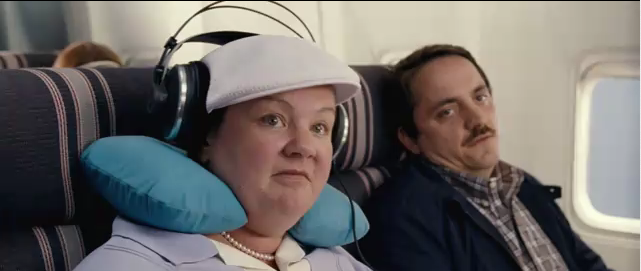
“The Help” actresses Octavia Spencer and Jessica Chastain are both solid, if unspectacular; Chastain in particular did better work in several other films this year, particularly “The Tree of Life” and “Take Shelter.” Bérénice Bejo is delightful in “The Artist,” but she’s also a lead actress committing category fraud. Janet McTeer is the best part of a bad movie in “Albert Nobbs.” In my mind, only Melissa McCarthy is deserving of her slot in the big race (so, of course, she’s not going to win – always a “Bridesmaid,” never a bride, after all).

If the category were to really feature the best performances of the year, Academy voters would reward ambitious work by Vanessa Redgrave in “Coriolanus.” They would reward the emotionally vibrant performance by Shailene Woodley in “The Descendants.” They would reward one of the most beautifully nuanced female performances of the year: Rose Byrne in “Bridesmaids.” Most of all, they would reward the ballsy, breathtaking work by Carey Mulligan in “Shame.”

This year’s Best Supporting Actress race is far too much like the usual Best Supporting Actor race – it rewards the comfortable over the ambitious. Unfortunately, it also ignores four incredible performances that deserved more recognition.

If I were an Oscar voter, McCarthy, Redgrave, Woodley and Byrne would all have tickets to the big show, and Mulligan would take home the honors for her powerful and unexpected work. But for now, it looks like we’ll have to settle for a Spencer win. What a disappointment.

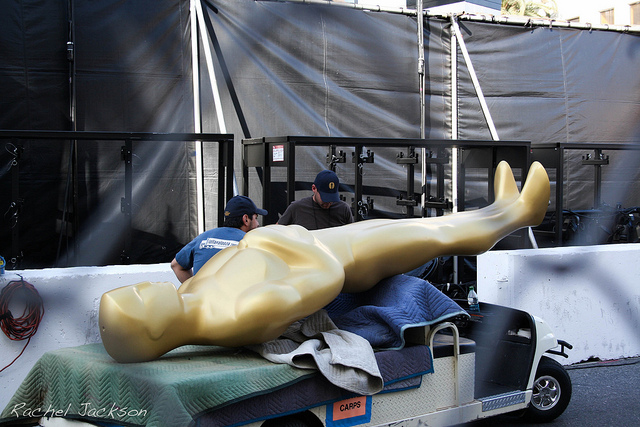
Oscar

The lamest Best Supporting Actor category ever

Originally posted as part of Road to the Gold, an Oscar blog on LALoyolan.com. For original, please refer to: The lamest Best Supporting Actor category ever – Los Angeles Loyolan: Road To The Gold.

Oscar

Photo Credit: Flickr Creative Commons

Somehow, this year’s Best Supporting Actor race has managed to be the dullest one in history. This is a category that has featured four straight years of winners who dominated every single precursor with little to no resistance: Javier Bardem for “No Country for Old Men,” Heath Ledger for “The Dark Knight,” Christoph Waltz for “Inglourious Basterds” and Christian Bale for “The Fighter.” And yet this year beats all the rest.

It was supposed to be different – this was a year that saw multiple stellar performances recognized early by multiple critics. Oscar front-runner Christopher Plummer received acclaim for his performance as a gay, cancer-stricken father in “Beginners,” while industry veteran Albert Brooks was lauded for his work as a gangster in “Drive.” Additionally, different voting bodies recognized Patton Oswalt for “Young Adult” and Armie Hammer in “J. Edgar.” It looked like a year when both veterans and younger performers alike would be rewarded.

When the nominations were announced, only Jonah Hill for “Moneyball” remained among the youngsters. Joining him were Plummer, “My Week with Marilyn” star Kenneth Branagh, Max Von Sydow from “Extremely Loud and Incredibly Close” and Nick Nolte from “Warrior.” Plummer, Von Sydow and Nolte are all over 70 years old. Branagh is 50. The average age of all nominees is 62.

Certainly the nominees don’t have to be young to be interesting, but it does make the category less diverse. All of the nominees are white as well. Of course, diversity isn’t required – but then again, it’s always appreciated, especially when the performances aren’t great. And the performances this year simply aren’t great.

To wit: While Brooks was playing against type and wonderfully menacing in “Drive,” Nolte is merely rekindling an old spark of talent in “Warrior.” It’s the difference between an ambitious performance and a reliable one, and that’s the constant struggle with Best Supporting Actor in particular. It tends to reward the comfortable over the tenacious.

Best Supporting Actor isn’t likely to change in structure for some time – it is, like all others, a category that rewards what’s available. Hopefully, more films will soon give supporting actors a chance to do the same powerful work as the front-runners each year. That way, the race can become more than just a footnote at the big show.

Oscar

Mary J. Blige is NOT happy: The Best Original Song blunder

Originally posted as part of Road to the Gold, an Oscar blog on LALoyolan.com. For original, please refer to: Mary J. Blige is NOT happy: The Best Original Song blunder – Los Angeles Loyolan: Road To The Gold.

Oscar

Photo Credit: Flickr Creative Commons

There is no category at the Academy Awards more simultaneously wonderful and embarrassing than Best Original Song. The category that has given us classics like Celine Dion’s “My Heart Will Go On” and The Swell Season’s “Falling Slowly” has also ignored powerful stuff from the likes of Bruce Springsteen and Cher in favor of more standard Randy Newman songs and the “we liked that?” musical hangover that followed “Jai Ho.”

This year’s Best Original Song competition is no change from the sordid past. While one of the songs nominated, “Man or Muppet,” is a lot of fun, the other is a minor track from “Rio,” the movie best remembered as finding a way to make Anne Hathaway even more animated than in real life. Ignored by this year’s voting body are some of the best tracks from “The Muppets” and Mary J. Blige’s soul anthem “The Living Proof” from Best Picture nominee “The Help.”

It’s likely “Man or Muppet” will emerge triumphant come ceremony time, but it will join a line of unremarkable songs that failed to make an impact on pop culture at large after winning the Oscar. The award hasn’t had much prestige ever since Three 6 Mafia took gold for their “Hustle & Flow” contribution “It’s Hard Out Here for a Pimp,” and recent history doesn’t indicate a change coming any time soon.

The problem lies with the voting system. It is the only branch of the Academy that allows members to vote against other songs, and a special provision made last year permits anywhere from two to five nominees. In other words, it is the least consistent category at the Oscars. Hence, it’s somewhat of an embarrassment for the Academy to keep the category in existence.

If Best Original Song is going to remain a competitive category, something needs to happen to the rules system sooner rather than later to make it friendlier for future classic songs and dynamic live performances at the Oscars. Perhaps a better selection committee or revised voting procedures could save the category. As it stands right now, it’s nothing more than an awkward footnote.

Smash

NBC takes a musical gamble with ‘Smash’

Originally published in the Los Angeles Loyolan. For original, please refer to: NBC takes a musical gamble with ‘Smash’ – Los Angeles Loyolan.

Smash

Photo Credit: YouTube | NBC

The Super Bowl may be over, but for hosting network NBC, their big gamble happens tonight. At 10/9 central, the struggling fourth-place network will air the pilot for “Smash,” a new musical drama that has been in development for several years. Starring Debra Messing of “Will and Grace” fame, as well as “American Idol” runner-up Katharine McPhee and grand dame of cinema Anjelica Huston, the show is attracting a lot of buzz for being a very different kind of project for NBC.

The pilot has been available on NBC.com and iTunes for some time now, and after watching it, I can say with absolute certainty that “Smash” is pretty terrible. Yes, the music is fun, and it certainly has its moments, but make no mistake, it’s really rather bad on the whole.

Here’s the issue, though: It’s still more ambitious and interesting than half of what’s on network television today. So should “Smash” be applauded as a risk or bashed for what it really is, a flop?

Let’s start with a quick diagnosis of why “Smash” fails. First, the good news: the musical moments are actually pretty great. While one might wonder why McPhee suddenly can’t sing “Somewhere Over the Rainbow,” her breakout song on “American Idol,” the other members of the ensemble, particularly Megan Hilty, are accomplished. Hilty is the only one who can act and sing in equal measure. The other principal performers, especially Messing and Huston, are hit-and-miss. Almost anyone who isn’t already a star in his or her own right on the show is borderline awful. Messing’s family might as well be played by pieces of plywood for all of their range.

Even the best actors are saddled with bad dialogue – Messing has to convincingly deliver a filibuster about revivals on Broadway rather than new material in the first five minutes of the episode, and the whole thing just arrives with a crash. Huston is chewing the scenery all over the place, which is a shame, because her wonderfully understated work in “50/50” was a highlight of the last year in cinema.

But the biggest problem with “Smash” is also one of its strengths: It is fully immersed in the theater world. Not the biggest fan of Broadway? “Smash” doesn’t really care about appeasing you – it’s going to continue talking about insider stuff, and expects you to keep up. That level of apathy for audience capability is rare to find on network television, but this isn’t exactly a cop show. If you live outside of New York City, some of this is gonna be flying over your head.

The nature of “Smash” is something more shows should try. So often, television series are weighed down by exposition to the point of never recovering fully – or they never catch up their audience. By the end of the episode, I already felt better about the show’s abilities to remain insider-focused but also attainable. The last song of the episode, “Let Me Be Your Star,” is an absolute home run, too. The finale was the only time I felt “Smash” could be a hit. But that was the end of the episode. It was just because of this column that I kept watching. Other viewers don’t have to stay tuned.

NBC was smart to release the pilot early – any fans that make it through the whole episode will be likely to stick around. As always, you can never count out musical theater nerds as an audience. After all, they’re the ones who keep “Glee” alive. But the next episodes just need to be better or else the show will never succeed.

Making such an ambitious, rare show is admirable on NBC’s part. However, the network just isn’t in the place to be taking such risks. More chances like this should be taken by CBS, the first-place network, because they can afford it. As far as “Smash” goes, it looks like NBC’s gamble just isn’t going to pay off.

Meryl Streep

Best Actress presents a Meryl Streep conundrum

Originally posted as part of Road to the Gold, an Oscar blog on LALoyolan.com. For original, please refer to: Best Actress presents a Meryl Streep conundrum – Los Angeles Loyolan : Road To The Gold.

Meryl Streep

Photo Credit: Flickr Creative Commons

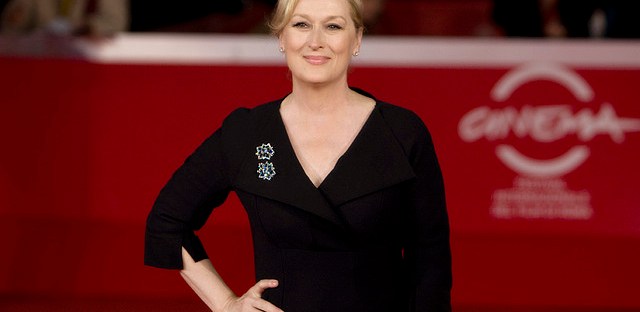
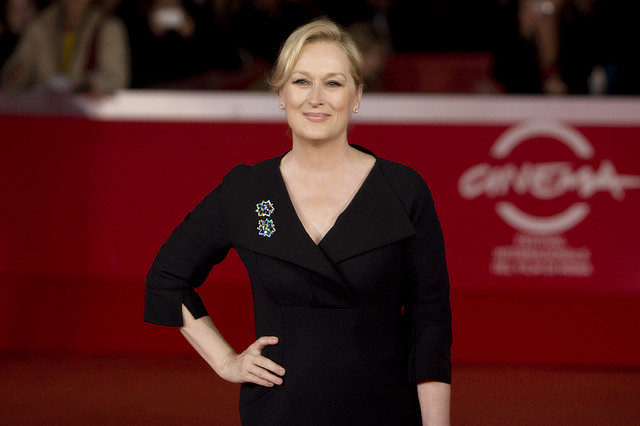
For the first time in over 20 years, it looks like Meryl Streep might finally win an Oscar. The 62-year-old actress, whom so many hail as the best living actress, has been nominated a record 17 times but hasn’t won since 1983 for “Sophie’s Choice.” Despite several close races – most recently losing to Sandra Bullock for “The Blind Side” in 2010 – Streep has been defeated in every Oscar race since.

This year, Streep is nominated for “The Iron Lady,” a biopic about British Prime Minister Margaret Thatcher that required the actress to adopt not one but two accents, in addition to physically transforming herself as the character aged. She is benefitting from a massive tide of good will, particularly because this is the fourth performance of hers in just six years (since “The Devil Wears Prada” in 2006) to get nominated. Most pundits have boiled down the race to a two-woman contest between Streep and her close friend and former co-star (in “Doubt”) Viola Davis.

Davis is nominated for “The Help,” in which she portrayed Aibleen, a maid working for a wealthy white family in the Civil Rights South who agrees to help a young journalist tell the help’s story. She has won the Critics’ Choice Award and Screen Actors Guild Award for the performance, while Streep has won the Golden Globe and several individual critics’ prizes for her own performance. The others in the race, including Michelle Williams for “My Week with Marilyn” and Glenn Close for “Albert Nobbs,” are considered also-rans who have no chance in the face of the Davis-Streep battle.

However, the race is once again taking the turn it always does: leaning towards an unrewarded candidate because of Streep’s extensive history with Oscar. It’s difficult for voters to consider Streep under-rewarded when she’s received so much acclaim and so many nominations over the course of her career. As a result, despite her early promise in every race since 2006, she’s wound up being defeated by another actress. Some races were close calls: Helen Mirren in “The Queen” was quite good, after all. And some races just weren’t: Bullock probably should have placed fourth in her year.

Davis is certainly worthy of the acclaim – her work in “The Help,” while not her best, is still a strong performance informed by the same dignity and power she brought to her work in “Doubt.” The issue lies with Streep’s inability to generate ‘win heat’ for her performances because she seems so heavily awarded already. It’s still possible she could pull out a win come Feb. 26, but I won’t be surprised if it’s Davis who takes the gold on Oscar night.